Random Comics Theatre
Space Circus #2 [2000]
This was part of a 4-issue mini done by the long-running GROO creative team (Sergio Aragones, Mark Evanier, Stan Sakai and Tom Luth) between GROO minis in 2000. The series is right what it says on the tin, the story of a touring circus travelling through space. In the first issue, on a repair stop on the backwater planet Earth, they accidentally pick up a stowaway, young Todd Cooper.
This time around, Todd tries to fit in with the circus, without much luck, and mistakenly helps some space pirates who have infiltrated the circus in a plan to steal the technology which will allow the pirates to invade "secured space".
A fun little issue by a well-oiled machine of a creative team. Aragones does some great fanciful designs of the various aliens, in particular on the centerfold which is a detailed double page splash page of the circus in action. I think I'll re-read the whole series while I have it out.
In addition to the main story, Evanier writes a two page short story in the form of a diary entry by the gorilla-like character Grlx, although they accidentally included the wrong Aragones illustrations (the ones for this story appear in #3). As is typical for Aragones books in the past few decades the backcover is a wordless gag page.
Doesn't look like this was ever reprinted. Wouldn't mind seeing it in an omnibus book of the other non-Groo work by the the Groo-crew, including MAGNOR, THE BOOGEYMAN and a few one-shots.
Saturday, July 20, 2019
Jonah Hex #57 [1982] (Random Comics Theatre)
Random Comics Theatre
This was briefly a regular feature of this weblog, where I let my computer pick one of the too-many comics I own and, if I'm in the mood to read it and not too embarrassed to admit I own it, I post a few things about it. Now that it seems I'm posting regularly again I'll try to revive it.
Jonah Hex #57 [1982]
I didn't read too much JONAH HEX when it was coming out. I think just a few stories that were reprinted in DC's annual "Year's Best" digest volumes. I also knew the character from a few guest appearances in other titles. It was years later that I picked up a handful of issues, mostly from around this era, which is about the mid-point of Michael Fleisher's long run as primary writer of the character, having replaced co-creator John Albano back in 1974 and continuing through the rest of the series and the follow-up HEX series until 1987. Tony DeZuniga, the other Hex co-creator, had recently returned to the feature, sometimes doing full art, usually just inking at this point. The pencils he worked on were most frequently from Dick Ayers, but for this issue the pencils were by Ross Andru. This was the only Hex story Andru penciled, as he was primarily an editor at this point, including most of the run of JONAH HEX, and also a frequent cover artist at DC, including many on this series.
"The Debt" is the 17-page lead story in this issue, and features what I gather is the only appearance of Hex's mother, who he greets pretty matter-of-factly for someone seeing their mother for the first time in 27 years. Quite a bit of the story is an extended flashback to the circumstances leading to her departure back in 1848. I think his understated demeanour is supposed to be intentional, but I also think it comes across as funnier than intended. I got to the end of the story and didn't even realize it was over until I flipped the page.
I've found Fleisher to be at best and uneven writer, and this is about in the middle of his range. A lot of stories I've read are much worse, occasionally he's very good this is just solid. I thought the Andru/DeZuniga combination on the art was very good, although Hex's facial injuries are much more understated than usual.
The back-up this issue was an 8-page El Diablo story, "Desert Hell", with DeZuniga doing full art on a Gary Cohn story with the Kanigher/Morrow created character of Lazarus Lane. I'm not too familiar with the character, I don't think any of his early 1970s stories have been reprinted. It has something to Lane being comatose following an accident, but emerging as the masked El Diablo when called on in the pursuit of justice, in this case a group of murdering bank robbers who flee into the desert, pursued straight to the gates of Hell. Or something. A pretty decent story, I'm sorry none of the other issues of HEX I have has more from the feature.
Rounding out the issue are two single-page historical bits on the old west by Laurie and Rob Rozakis and Adrian Gonzales, looking at food on the frontier and the short-lived Pony Express.
This was briefly a regular feature of this weblog, where I let my computer pick one of the too-many comics I own and, if I'm in the mood to read it and not too embarrassed to admit I own it, I post a few things about it. Now that it seems I'm posting regularly again I'll try to revive it.
Jonah Hex #57 [1982]
I didn't read too much JONAH HEX when it was coming out. I think just a few stories that were reprinted in DC's annual "Year's Best" digest volumes. I also knew the character from a few guest appearances in other titles. It was years later that I picked up a handful of issues, mostly from around this era, which is about the mid-point of Michael Fleisher's long run as primary writer of the character, having replaced co-creator John Albano back in 1974 and continuing through the rest of the series and the follow-up HEX series until 1987. Tony DeZuniga, the other Hex co-creator, had recently returned to the feature, sometimes doing full art, usually just inking at this point. The pencils he worked on were most frequently from Dick Ayers, but for this issue the pencils were by Ross Andru. This was the only Hex story Andru penciled, as he was primarily an editor at this point, including most of the run of JONAH HEX, and also a frequent cover artist at DC, including many on this series.
"The Debt" is the 17-page lead story in this issue, and features what I gather is the only appearance of Hex's mother, who he greets pretty matter-of-factly for someone seeing their mother for the first time in 27 years. Quite a bit of the story is an extended flashback to the circumstances leading to her departure back in 1848. I think his understated demeanour is supposed to be intentional, but I also think it comes across as funnier than intended. I got to the end of the story and didn't even realize it was over until I flipped the page.
I've found Fleisher to be at best and uneven writer, and this is about in the middle of his range. A lot of stories I've read are much worse, occasionally he's very good this is just solid. I thought the Andru/DeZuniga combination on the art was very good, although Hex's facial injuries are much more understated than usual.
The back-up this issue was an 8-page El Diablo story, "Desert Hell", with DeZuniga doing full art on a Gary Cohn story with the Kanigher/Morrow created character of Lazarus Lane. I'm not too familiar with the character, I don't think any of his early 1970s stories have been reprinted. It has something to Lane being comatose following an accident, but emerging as the masked El Diablo when called on in the pursuit of justice, in this case a group of murdering bank robbers who flee into the desert, pursued straight to the gates of Hell. Or something. A pretty decent story, I'm sorry none of the other issues of HEX I have has more from the feature.
Rounding out the issue are two single-page historical bits on the old west by Laurie and Rob Rozakis and Adrian Gonzales, looking at food on the frontier and the short-lived Pony Express.
Friday, July 12, 2019
Random Realities 2019.07.12
So, where was I...
Wait, three posts in one week? Weird...
This time around, a look at a fanzine cover leads to some memories of the Inferior Five, a podcast recommendation, a Karen Berger interview leads to thoughts of doing a Vertigo retrospective series and a quick review of a rare streaming series that was better than I expected.
I've got an absurd amount of comics related magazines in my collection. Now, I'm sure that some people would say that more than one is an absurd number, but I have considerably more than that. As in over 500. A lot of them have pretty cool rarely seen covers, so I figured I'd post them every now and write a few words about the art or the artist or the characters.
I listen to quite a few podcasts these days, so I think I'll start posting my podcast episode recommendation of the (day) (week) (month) (however often I end up posting). My choice for this time is Punch Up The Jam episode 78 with regular (for now) hosts Demi Adejuyigbe and Miel Bredouw and guest Matt Belknap discussing and the 1990 song "Poison" by Bell Biv DeVoe. This is kind of full circle since I first heard of Adejuyigbe when he appeared on the Belknap co-hosted Never Not Funny, and started listening to Punch based on a mention on NNF.
The high concept of the podcast is that the hosts (usually but not always with a guest) discuss a song in ridiculous depth, and then one or both of the hosts debuts a cover/parody of the song that usually comments on some problematic or ridiculous aspects of the song, or just goes off on some random silly tangent.
It's always an enjoyable show, but this was an especially good episode. Belknap has an interesting history with the song, and he's got a lot of experience talking at length about trivial topics into a microphone. And this particular song is much more ridiculous than I was aware, having never really listened to the lyrics, and Adejuyigbe delivers a perfect punch up.
There's some interesting stuff in this interview with Karen Berger, proprietor of the Berger Books line and founder of the soon-to-be-retired Vertigo imprint at DC. She talks about some of the reasons that she left the Vertigo back in 2013, and how those reasons probably made the closing of the line inevitable, as well as about the current books she's working on.
I've been thinking a lot about the Vertigo line lately, which is kind of odd since I was never the most vociferous reader of those books. They did publish several books that I consider favourites, but I also couldn't get through a lot of their major books. The label was never a guarantee that I would like a book, but I think in the heyday of the line it was at least a signal that a book was worth taking a second look at, or sampling. Anyway, I was finding that there's a real lack of a solid resource about the history of the line and everything they published, so I've been toying with the idea of doing a series of posts on this weblog about the line, looking at the history leading up to the founding of the line, all of the books they published, what I though of them if I read them, or whether they look interesting enough to track down and read now, if they're even available (many have found homes at other publishers). Eventually I'd like to even talk about the reasons for the end of the line, and some of the things spawned by it (several publishers/imprints in addition to Berger Books are currently run by former key Vertigo editors).
Anyway, something I've been thinking of. Not sure if I'll actually do it, and how far I'll get if I try, but we'll see.
One of the better TV shows I've watch recently was "Dead To Me", available on Netflix, which was a pleasant surprise. I didn't have high expectations based on the premise, a recent widow being befriended at a support group by a woman with a dark secret, but I heard some good things about it. And I thought I kind of guessed the secret early on, and was dreading it. Then it turned out to be something else. Then it turned out to also be what I thought in the first place. And then I thought maybe it didn't. And it turns out it did. Maybe. Anyway there are quite a few twists and turns, and I kept expecting it to veer off, but it remained interesting right up to the end (fortunately it's only 10 episodes, usually around 30 minutes, so it doesn't suffer the streaming series mid-season bloat all too common in 2019). I was glad to hear that it was renewed for a second season, which I was not expecting all through the first.
Okay, that's a wrap. I introduced a few of the recurring things I hope to do here in the future. If anyone is still reading, feel free to let me know if any of them are especially appealing to you.
Wait, three posts in one week? Weird...
This time around, a look at a fanzine cover leads to some memories of the Inferior Five, a podcast recommendation, a Karen Berger interview leads to thoughts of doing a Vertigo retrospective series and a quick review of a rare streaming series that was better than I expected.
I've got an absurd amount of comics related magazines in my collection. Now, I'm sure that some people would say that more than one is an absurd number, but I have considerably more than that. As in over 500. A lot of them have pretty cool rarely seen covers, so I figured I'd post them every now and write a few words about the art or the artist or the characters.
This 1983 AMAZING HEROES cover is by Kevin Nowlan, and features the 1960s DC team the Inferior Five. Nowlan had been doing great work in the fan press for a while, and I think just starting to do some professional work at the time, and would go on to do some spectacular work both as a solo artist and as an inker (and even as a letterer, like the recently discussed MOONSHADOW). He hasn't posted in a while, but his blog is a treasure trove of rare images and process art.
For those unfamiliar with the characters, this was a super-hero parody series, featuring the children of some (invented for the series) retired golden age super-heroes who are pressured to enter into the family business, despite not quite having the powers or temperaments for it. Much chaos ensues, including several issues which make fun of those new super-heroes popping up across town at Marvel.
I was briefly excited when I saw The Inferior Five on a list of upcoming DC releases, but it turns out that it's a new revival that takes the name, but so far it appears nothing else, from the original concept. I might check out this new book sometime, since both Keith Giffen and Jeff Lemire have done work I've liked in the past, but I was briefly hopeful we were finally getting a reprint of the 1966-68 comics (three issues of SHOWCASE followed by a ten issue series) by creators E.Nelson Bridwell and Joe Orlando and other artists, including Mike Sekowsky and Win Mortimer. I've read about half of those, and really enjoyed them. Hopefully with the revival of the name maybe we'll see a reprint of the original, at least digitally. And hey, DC, if you're doing a reprint, I can recommend someone to draw a new cover...
.
I listen to quite a few podcasts these days, so I think I'll start posting my podcast episode recommendation of the (
The high concept of the podcast is that the hosts (usually but not always with a guest) discuss a song in ridiculous depth, and then one or both of the hosts debuts a cover/parody of the song that usually comments on some problematic or ridiculous aspects of the song, or just goes off on some random silly tangent.
It's always an enjoyable show, but this was an especially good episode. Belknap has an interesting history with the song, and he's got a lot of experience talking at length about trivial topics into a microphone. And this particular song is much more ridiculous than I was aware, having never really listened to the lyrics, and Adejuyigbe delivers a perfect punch up.
There's some interesting stuff in this interview with Karen Berger, proprietor of the Berger Books line and founder of the soon-to-be-retired Vertigo imprint at DC. She talks about some of the reasons that she left the Vertigo back in 2013, and how those reasons probably made the closing of the line inevitable, as well as about the current books she's working on.
I've been thinking a lot about the Vertigo line lately, which is kind of odd since I was never the most vociferous reader of those books. They did publish several books that I consider favourites, but I also couldn't get through a lot of their major books. The label was never a guarantee that I would like a book, but I think in the heyday of the line it was at least a signal that a book was worth taking a second look at, or sampling. Anyway, I was finding that there's a real lack of a solid resource about the history of the line and everything they published, so I've been toying with the idea of doing a series of posts on this weblog about the line, looking at the history leading up to the founding of the line, all of the books they published, what I though of them if I read them, or whether they look interesting enough to track down and read now, if they're even available (many have found homes at other publishers). Eventually I'd like to even talk about the reasons for the end of the line, and some of the things spawned by it (several publishers/imprints in addition to Berger Books are currently run by former key Vertigo editors).
Anyway, something I've been thinking of. Not sure if I'll actually do it, and how far I'll get if I try, but we'll see.
One of the better TV shows I've watch recently was "Dead To Me", available on Netflix, which was a pleasant surprise. I didn't have high expectations based on the premise, a recent widow being befriended at a support group by a woman with a dark secret, but I heard some good things about it. And I thought I kind of guessed the secret early on, and was dreading it. Then it turned out to be something else. Then it turned out to also be what I thought in the first place. And then I thought maybe it didn't. And it turns out it did. Maybe. Anyway there are quite a few twists and turns, and I kept expecting it to veer off, but it remained interesting right up to the end (fortunately it's only 10 episodes, usually around 30 minutes, so it doesn't suffer the streaming series mid-season bloat all too common in 2019). I was glad to hear that it was renewed for a second season, which I was not expecting all through the first.
Okay, that's a wrap. I introduced a few of the recurring things I hope to do here in the future. If anyone is still reading, feel free to let me know if any of them are especially appealing to you.
Tuesday, July 09, 2019
Recently read 2019.07.09
So, where was I...
Wait, it's still the same month as the last post? That can't be right...
Some quick thoughts on stuff I've read recently. RED RANGE, 4 KIDS WALK INTO A BANK and IMMORTAL HULK, if you want to know before scrolling down.
RED RANGE by Sam J. Glanzman and Joe R. Lansdale
This is a 2017 edition of the western adventure first published in 1999, in colour and hardcover for the first time and with lots of extras. I did get the original, though a few years after it was first published. I'm not sure if I even saw it when it came out, and if I did I might have passed by it because of the odd choice to use the completely incongruous N. C. Wyeth idyllic painting "Cowboy Watering His Horse" from 1937 as the cover. Let's just say that watering his horse isn't top on the priority list for the Red Mask, Caleb Range, the hero of the book (not sure why the title mixes his two names, like calling a book "The Lone Reid" or "Bat Wayne"). Fortunately this new edition has a much more appropriate cover, using Glanzman's interior art.
Anyway, it's a great, if somewhat brutally violent book about a black man in post-Civil War Texas who rescues a young boy named Rufus from the Klansmen who murdered both of their families. The story takes a pretty unexpected third act twist, and even promises a sequel on the final page which is only now coming twenty years later from Lansdale's son (note that the interview and images in the link will give away the twist in the original book). The colouring is well done, not obscuring any of the linework, I think I like it more than the original version. If you're familiar with the Jonah Hex work that Lansdale and Glanzman (with Tim Truman) did in the years prior to this book you have an idea of what you're getting into, only it's much more unrestrained and profane than those books.
Extras include a short western story by Glanzman that fits the theme (kind of a shame they don't have "Devil's Sombrero" from DC's WEIRD WESTERN TALES #2 [2001], another Lansdale/Glanzman work. They also did a war story together in another Vertigo anthology) and some extensive notes from Stephen Bissette placing the work in context of both the creators' careers, the history of cowboy fiction and race and the history of cowboy fiction and... something else that's part of the twist.
4 KIDS WALK INTO A BANK by Tyler Boss and Matthew Rosenberg
This is a collection of a 5-issue series published from 2016-7, about a young girl and her friends who get involved in a world of schemes and heists when she tries to protect her father from some lowlife acquaintances.
The book wears its cinematic influences on its sleeve (and on the backcover, where several of them like Tarantino and THE GOONIES are namechecked in review excerpts, and again in about 3 dozen variant covers in the backmatter, many of them based on iconic movie posters, and again in the chapter breaks with quotes from various movies modified to fit the characters), but does a good job of translating those influences to a comic page, doing things in the story that couldn't have worked the same way on screen. I especially liked the opening of each issue using one of the games that the kids play to set up the situation with some added visual flair.
While there's nothing overly revolutionary about what the book does, it does it all well (though I'm not sure I really liked the ending). It's also a nicely put together book, much better designed and substantial feeling that most books that come out from major publishers.
IMMORTAL HULK Vol. 1 - OR IS HE BOTH?
IMMORTAL HULK Vol. 2 - THE GREEN DOOR
IMMORTAL HULK Vol. 3 - HULK IN HELL
by Joe Bennett, Al Ewing, Ruy José & Co.
This is the current iteration of the 1962 Jack Kirby creation, launched in 2018 and still on-going. These three books collect the first 15 issues of the run. Al Ewing writes all of it, Joe Bennett and Ruy José draw most of it, with occasional guest artists. Fortunately, unlike the usual Marvel way of random artist changes, the guest art is usually used for specific storytelling reasons (flashback scenes, stories told by other narrators).
This has become a much hyped book in the last few months, enough that it probably can't live up to the hype, and it really doesn't. I mean, it's pretty good, nicely readable, builds on Hulk history going back over 50 years but for the most part it doesn't seem to require knowledge of all that history, or explains the parts that are needed, and tells a different type of Hulk story. In the last few stories of this run I think Ewing tripped up on that a bit, as I had the feeling I was missing something from my spotty knowledge of Hulk history. I do find the writing a bit thin, so where get to in 15 issues probably could have been more effectively done in about 10, but I'd need more of the story to assess how much of the extra stuff was important and how much was filler.
I was pretty pleasantly surprised by Bennett's art, which had never made too much of impression on me before. It's bold and open in a way that fits the story. I did think the bigger action sequences tended to be less clear than I'd have liked, it sometimes took me a few tries to figure them out, or it only became obvious in retrospect as the story played out, but overall I liked it.
I've heard some people talk about this run as somehow transformational, as if you couldn't go back to the classic "Hulk Smash" version of the character. I'm not convinced that's the case at all, based on the first three books. I remember hearing similar things about the run Bruce Jones did almost 20 years ago, and that run seems to be less than a footnote in comics history now. And the Planet Hulk story by Greg Pak, which at least started off better and more transformational, that was all eventually reversed. Certainly you can read this run without any reference to the Jones or Pak version (while aspects of the earlier Peter David version are essential backmatter) I imagine this run will be fondly remembered if it sticks the landing, however far in the future that is, or quietly forgotten if it doesn't, but in any case followed up by a return to a classic version of the Hulk or a whole other version.
For the future, they seem to publish enough for three of these thin collections a year, so I'll probably catch up once a year until it ends. I wouldn't be surprised if it goes in the 50-60 issue range (possibly with some relaunches and title changes, given modern Marvel) so that's a few years away. Hopefully they keep it to one book, and don't do the classic Marvel response to success and launch THE IMMORTAL SHE-HULK, THE IMMORTAL RICK JONES, THE IMMORTAL ABOMINATION and THE IMMORTAL SQUIRREL GIRL.
The biggest problem is how slight and insubstantial each of the books feels. Five issue collections, with most issues only have about 20 pages of story, and printed on about the thinnest paper that would be acceptable. Very little thought given to the design, just the standard Marvel cookie-cutter book design. Variant covers are thrown in at random between issues (probably so that the double page spreads line up correctly), sometimes those are covers that don't even have anything to do with the Hulk, much less this version of the Hulk. Nothing like a random pin-up of Conan fighting the Avengers to keep the story momentum going in a Hulk comic. And, I'm sure I've complained about this before, but why does Marvel continue to use the inside front and back covers of their books for ads? At least they've gotten better over the last few years and usually have ads for related books (it seemed to be random before), but it still looks cheap and crass. I don't think any other publisher feels the need to do that. Keep them blank or design some nice endpapers.
Wait, it's still the same month as the last post? That can't be right...
Some quick thoughts on stuff I've read recently. RED RANGE, 4 KIDS WALK INTO A BANK and IMMORTAL HULK, if you want to know before scrolling down.
RED RANGE by Sam J. Glanzman and Joe R. Lansdale
This is a 2017 edition of the western adventure first published in 1999, in colour and hardcover for the first time and with lots of extras. I did get the original, though a few years after it was first published. I'm not sure if I even saw it when it came out, and if I did I might have passed by it because of the odd choice to use the completely incongruous N. C. Wyeth idyllic painting "Cowboy Watering His Horse" from 1937 as the cover. Let's just say that watering his horse isn't top on the priority list for the Red Mask, Caleb Range, the hero of the book (not sure why the title mixes his two names, like calling a book "The Lone Reid" or "Bat Wayne"). Fortunately this new edition has a much more appropriate cover, using Glanzman's interior art.
Anyway, it's a great, if somewhat brutally violent book about a black man in post-Civil War Texas who rescues a young boy named Rufus from the Klansmen who murdered both of their families. The story takes a pretty unexpected third act twist, and even promises a sequel on the final page which is only now coming twenty years later from Lansdale's son (note that the interview and images in the link will give away the twist in the original book). The colouring is well done, not obscuring any of the linework, I think I like it more than the original version. If you're familiar with the Jonah Hex work that Lansdale and Glanzman (with Tim Truman) did in the years prior to this book you have an idea of what you're getting into, only it's much more unrestrained and profane than those books.
Extras include a short western story by Glanzman that fits the theme (kind of a shame they don't have "Devil's Sombrero" from DC's WEIRD WESTERN TALES #2 [2001], another Lansdale/Glanzman work. They also did a war story together in another Vertigo anthology) and some extensive notes from Stephen Bissette placing the work in context of both the creators' careers, the history of cowboy fiction and race and the history of cowboy fiction and... something else that's part of the twist.
4 KIDS WALK INTO A BANK by Tyler Boss and Matthew Rosenberg
This is a collection of a 5-issue series published from 2016-7, about a young girl and her friends who get involved in a world of schemes and heists when she tries to protect her father from some lowlife acquaintances.
The book wears its cinematic influences on its sleeve (and on the backcover, where several of them like Tarantino and THE GOONIES are namechecked in review excerpts, and again in about 3 dozen variant covers in the backmatter, many of them based on iconic movie posters, and again in the chapter breaks with quotes from various movies modified to fit the characters), but does a good job of translating those influences to a comic page, doing things in the story that couldn't have worked the same way on screen. I especially liked the opening of each issue using one of the games that the kids play to set up the situation with some added visual flair.
While there's nothing overly revolutionary about what the book does, it does it all well (though I'm not sure I really liked the ending). It's also a nicely put together book, much better designed and substantial feeling that most books that come out from major publishers.
IMMORTAL HULK Vol. 1 - OR IS HE BOTH?
IMMORTAL HULK Vol. 2 - THE GREEN DOOR
IMMORTAL HULK Vol. 3 - HULK IN HELL
by Joe Bennett, Al Ewing, Ruy José & Co.
This is the current iteration of the 1962 Jack Kirby creation, launched in 2018 and still on-going. These three books collect the first 15 issues of the run. Al Ewing writes all of it, Joe Bennett and Ruy José draw most of it, with occasional guest artists. Fortunately, unlike the usual Marvel way of random artist changes, the guest art is usually used for specific storytelling reasons (flashback scenes, stories told by other narrators).
This has become a much hyped book in the last few months, enough that it probably can't live up to the hype, and it really doesn't. I mean, it's pretty good, nicely readable, builds on Hulk history going back over 50 years but for the most part it doesn't seem to require knowledge of all that history, or explains the parts that are needed, and tells a different type of Hulk story. In the last few stories of this run I think Ewing tripped up on that a bit, as I had the feeling I was missing something from my spotty knowledge of Hulk history. I do find the writing a bit thin, so where get to in 15 issues probably could have been more effectively done in about 10, but I'd need more of the story to assess how much of the extra stuff was important and how much was filler.
I was pretty pleasantly surprised by Bennett's art, which had never made too much of impression on me before. It's bold and open in a way that fits the story. I did think the bigger action sequences tended to be less clear than I'd have liked, it sometimes took me a few tries to figure them out, or it only became obvious in retrospect as the story played out, but overall I liked it.
I've heard some people talk about this run as somehow transformational, as if you couldn't go back to the classic "Hulk Smash" version of the character. I'm not convinced that's the case at all, based on the first three books. I remember hearing similar things about the run Bruce Jones did almost 20 years ago, and that run seems to be less than a footnote in comics history now. And the Planet Hulk story by Greg Pak, which at least started off better and more transformational, that was all eventually reversed. Certainly you can read this run without any reference to the Jones or Pak version (while aspects of the earlier Peter David version are essential backmatter) I imagine this run will be fondly remembered if it sticks the landing, however far in the future that is, or quietly forgotten if it doesn't, but in any case followed up by a return to a classic version of the Hulk or a whole other version.
For the future, they seem to publish enough for three of these thin collections a year, so I'll probably catch up once a year until it ends. I wouldn't be surprised if it goes in the 50-60 issue range (possibly with some relaunches and title changes, given modern Marvel) so that's a few years away. Hopefully they keep it to one book, and don't do the classic Marvel response to success and launch THE IMMORTAL SHE-HULK, THE IMMORTAL RICK JONES, THE IMMORTAL ABOMINATION and THE IMMORTAL SQUIRREL GIRL.
The biggest problem is how slight and insubstantial each of the books feels. Five issue collections, with most issues only have about 20 pages of story, and printed on about the thinnest paper that would be acceptable. Very little thought given to the design, just the standard Marvel cookie-cutter book design. Variant covers are thrown in at random between issues (probably so that the double page spreads line up correctly), sometimes those are covers that don't even have anything to do with the Hulk, much less this version of the Hulk. Nothing like a random pin-up of Conan fighting the Avengers to keep the story momentum going in a Hulk comic. And, I'm sure I've complained about this before, but why does Marvel continue to use the inside front and back covers of their books for ads? At least they've gotten better over the last few years and usually have ads for related books (it seemed to be random before), but it still looks cheap and crass. I don't think any other publisher feels the need to do that. Keep them blank or design some nice endpapers.
Sunday, July 07, 2019
MOONSHADOW, DeMatteis and other topics
So, where was I...
Well, the stars are in that peculiar alignment which causes me to post on this weblog again. Will this mark the return of regular posting? History suggests it will not. In fact, I'll state right now flatly that it will not, since my track record on predicting things is so bad that it'll increase the odds if I bet against it.
(topics below include the career of J.M. DeMatteis, the news on MAD MAGAZINE and the TV show ONE DAY AT A TIME)
So, one of the things that I wanted to mention was the new edition of MOONSHADOW by J.M. DeMatteis and Jon J. Muth (with a few guest artists). I'm technically still on a policy of not getting any newly published print comics, and doubly so not any that mostly duplicate stuff I already have in some form, with a few exceptions. This is one of those exceptions, as I just really love this comic. It was originally published by Archie Goodwin's Epic from 1985 to 1987, though I didn't discover it until 1994 when it was reprinted by Karen Berger's Vertigo, where it also eventually got an epilogue published in 1997. This new hardcover collects all the original 13 comics, a new introduction, plus over 30 pages of extras, in one impressive 512-page package. Some sample pages are at Dark Horse's website, DeMatteis has posted his introduction on his site.
It's pretty much an impossible book to summarize, as it ranges all over the map, it can be poetic, scatological, profound, profane, literary, vulgar, hilarious, tearjerking and many more things, often many of them on the same page. Sometimes even the same panel. If I end up posting regularly here (which, I stress, I probably will not) I really want to get more into this book as I re-read it, and especially as I go over some of the fascinating looking bonus material.
I've actually been thinking a lot about DeMatteis' work in general in the last few months, since this book was announced. The closing of the Vertigo line had me thinking about some of my favourite books from that line, several of which were from DeMatteis. I also just read his recent series THE GIRL IN THE BAY (with artist Corin Howell, published by Berger Books at Dark Horse), and I liked it a lot, except for the fact that it's too short and sets up a longer story not currently on the schedule, and I was thinking that it was a welcome return to my favourite facet of DeMatteis' long and varied career, the adult horror/fantasy with a philosophical tinge. I think the last book in that vein was SEEKERS INTO THE MYSTERY back in 1996/7, and has been mostly supplanted in the last two decades by his (always very enjoyable) comics more aimed at children, starting with ABADAZAD in 2004. And then since I like to categorize things, I got to thinking how many different DeMatteises there have been in a comics career going back over 40 years. He's been remarkably prolific in that time, probably over 1000 comics written, and while I can't claim to be an expert, as I've probably read under half of them, that's still a lot I've read.
As I said, my favourite is the one doing adult comics, usually with some horror/fantasy element, often exploring philosophical matters and with veiled or explicit autobiographical elements. MOONSHADOW is probably the exemplar of that body of work, although my favourite is probably BROOKLYN DREAMS or THE LAST ONE. I think the first hint of this DeMatteis was the "Greenberg The Vampire" story in BIZARRE ADVENTURES #29 back in 1981, though I haven't read too many of his earlier short stories in DC anthologies to see if any of them suggest what the future would hold (though obviously all of them would have been code-approved, so lacking in bite).
The children's book writer is probably my second favourite. A lot of these books have a metatextual angle, and are heavily inspired by some classics like Baum, Carroll and others. ABADAZAD is probably the exemplar there, despite its unfinished status. It's also my favourite, unless you want to expand beyond comics to the novel IMAGINALIS. I need to re-read the two AUGUSTA WIND books, they might also be a contender.
I consider the next DeMatteis, and the first I was really familiar with, to be the one most associated with his collaborations with Keith Giffen . Obviously the exemplar there is the JUSTICE LEAGUE run from 1987 to 1992, with a few reprises since. Some of the related books he wrote solo (like DR. FATE and MISTER MIRACLE) also fall in this category. HERO SQUARED from Boom is also a good read, as is their DEFENDERS mini-series. I need to get around to reading some of their more recent collaborations.
I'm not as familiar with the rest of DeMatteis' work to know if I need to divide the rest of his career into two or more categories. This would be the general mainstream comics, which are generally more serious than the Giffen collaborations (though not without humour). Tentatively I'd say the exemplar here would be the classic Spider-Man story "Kraven's Last Hunt". There's also some excellent Batman and Doctor Strange work in this group. I've heard some good stuff about some of the other Spider-Man work and others. I really liked parts of the SPECTRE series he did. I suppose I'd put THE LIFE AND TIMES OF SAVIOR 28 series from 2009 (partly based on plans he had for Captain America in the 1980s) in here. Like I said, I need to explore this stuff in more detail, I've liked a lot of it. If I ever get the Marvel Unlimited digital service I think most of the first few months would be spent reading DeMatteis comics (the rest would probably be reading any Steve Gerber comics I don't have yet).
Wow, that ended up being a lot longer than I expected. It's a good thing that I probably won't keep posting or I'd have to go on a DeMatteis reading / re-reading jag and writing about that. And if someone more qualified than me wants to do a DeMatteis career retrospective, I'll be there to read it.
In other news...
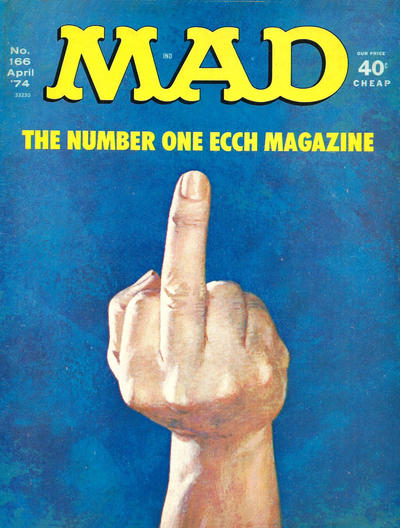
Sorry to hear about the recent news about MAD MAGAZINE going all-reprint and taken off the newsstands, likely as a precursor to its cancellation (though no doubt the brand will survive in some form other than a printed periodical). Like just about everyone else, I was a big fan of it in my formative years, the stuff published while I was 8-12, and later read quite a bit of the earlier stuff, back to the original Harvey Kurtzman colour comics run, plus many of the Sergio Aragones, Don Martin, Al Jaffee, etc. books. And again like just about everyone else, I hadn't really paid much attention to the new stuff in a few years, which maybe makes my aforementioned sadness a trifle hypocritical. And if I can identify hypocrisy, even in myself, I owe it to MAD (and to a lesser extent CRACKED. But never CRAZY!!).
I spend way too much time watching TV these days, so I though probably write about some of that here, if I continue to post (which is so unlikely to happen). I was very pleasantly surprised by the revival of ONE DAY AT A TIME. I had only vague memories of the original show, but after hearing several words of praise for the revival, some from unexpected corners, I gave it a try and found it to be a very watchable family sitcom with a lot of genuine emotion, a lot of humour, some of it from unexpected directions, and sometimes almost educational. I was actually sorry to hear that it was cancelled, which was announced when I was about half-way through the run, and very happy to hear that it uncancelled, though I'm still not sure if the next season will be available somewhere I can watch.
Okay, this is already a lot longer post than anyone wants to read. I'll be back soon, or more likely next year.
Well, the stars are in that peculiar alignment which causes me to post on this weblog again. Will this mark the return of regular posting? History suggests it will not. In fact, I'll state right now flatly that it will not, since my track record on predicting things is so bad that it'll increase the odds if I bet against it.
(topics below include the career of J.M. DeMatteis, the news on MAD MAGAZINE and the TV show ONE DAY AT A TIME)
So, one of the things that I wanted to mention was the new edition of MOONSHADOW by J.M. DeMatteis and Jon J. Muth (with a few guest artists). I'm technically still on a policy of not getting any newly published print comics, and doubly so not any that mostly duplicate stuff I already have in some form, with a few exceptions. This is one of those exceptions, as I just really love this comic. It was originally published by Archie Goodwin's Epic from 1985 to 1987, though I didn't discover it until 1994 when it was reprinted by Karen Berger's Vertigo, where it also eventually got an epilogue published in 1997. This new hardcover collects all the original 13 comics, a new introduction, plus over 30 pages of extras, in one impressive 512-page package. Some sample pages are at Dark Horse's website, DeMatteis has posted his introduction on his site.
It's pretty much an impossible book to summarize, as it ranges all over the map, it can be poetic, scatological, profound, profane, literary, vulgar, hilarious, tearjerking and many more things, often many of them on the same page. Sometimes even the same panel. If I end up posting regularly here (which, I stress, I probably will not) I really want to get more into this book as I re-read it, and especially as I go over some of the fascinating looking bonus material.
I've actually been thinking a lot about DeMatteis' work in general in the last few months, since this book was announced. The closing of the Vertigo line had me thinking about some of my favourite books from that line, several of which were from DeMatteis. I also just read his recent series THE GIRL IN THE BAY (with artist Corin Howell, published by Berger Books at Dark Horse), and I liked it a lot, except for the fact that it's too short and sets up a longer story not currently on the schedule, and I was thinking that it was a welcome return to my favourite facet of DeMatteis' long and varied career, the adult horror/fantasy with a philosophical tinge. I think the last book in that vein was SEEKERS INTO THE MYSTERY back in 1996/7, and has been mostly supplanted in the last two decades by his (always very enjoyable) comics more aimed at children, starting with ABADAZAD in 2004. And then since I like to categorize things, I got to thinking how many different DeMatteises there have been in a comics career going back over 40 years. He's been remarkably prolific in that time, probably over 1000 comics written, and while I can't claim to be an expert, as I've probably read under half of them, that's still a lot I've read.
As I said, my favourite is the one doing adult comics, usually with some horror/fantasy element, often exploring philosophical matters and with veiled or explicit autobiographical elements. MOONSHADOW is probably the exemplar of that body of work, although my favourite is probably BROOKLYN DREAMS or THE LAST ONE. I think the first hint of this DeMatteis was the "Greenberg The Vampire" story in BIZARRE ADVENTURES #29 back in 1981, though I haven't read too many of his earlier short stories in DC anthologies to see if any of them suggest what the future would hold (though obviously all of them would have been code-approved, so lacking in bite).
The children's book writer is probably my second favourite. A lot of these books have a metatextual angle, and are heavily inspired by some classics like Baum, Carroll and others. ABADAZAD is probably the exemplar there, despite its unfinished status. It's also my favourite, unless you want to expand beyond comics to the novel IMAGINALIS. I need to re-read the two AUGUSTA WIND books, they might also be a contender.
I consider the next DeMatteis, and the first I was really familiar with, to be the one most associated with his collaborations with Keith Giffen . Obviously the exemplar there is the JUSTICE LEAGUE run from 1987 to 1992, with a few reprises since. Some of the related books he wrote solo (like DR. FATE and MISTER MIRACLE) also fall in this category. HERO SQUARED from Boom is also a good read, as is their DEFENDERS mini-series. I need to get around to reading some of their more recent collaborations.
I'm not as familiar with the rest of DeMatteis' work to know if I need to divide the rest of his career into two or more categories. This would be the general mainstream comics, which are generally more serious than the Giffen collaborations (though not without humour). Tentatively I'd say the exemplar here would be the classic Spider-Man story "Kraven's Last Hunt". There's also some excellent Batman and Doctor Strange work in this group. I've heard some good stuff about some of the other Spider-Man work and others. I really liked parts of the SPECTRE series he did. I suppose I'd put THE LIFE AND TIMES OF SAVIOR 28 series from 2009 (partly based on plans he had for Captain America in the 1980s) in here. Like I said, I need to explore this stuff in more detail, I've liked a lot of it. If I ever get the Marvel Unlimited digital service I think most of the first few months would be spent reading DeMatteis comics (the rest would probably be reading any Steve Gerber comics I don't have yet).
Wow, that ended up being a lot longer than I expected. It's a good thing that I probably won't keep posting or I'd have to go on a DeMatteis reading / re-reading jag and writing about that. And if someone more qualified than me wants to do a DeMatteis career retrospective, I'll be there to read it.
In other news...
Sorry to hear about the recent news about MAD MAGAZINE going all-reprint and taken off the newsstands, likely as a precursor to its cancellation (though no doubt the brand will survive in some form other than a printed periodical). Like just about everyone else, I was a big fan of it in my formative years, the stuff published while I was 8-12, and later read quite a bit of the earlier stuff, back to the original Harvey Kurtzman colour comics run, plus many of the Sergio Aragones, Don Martin, Al Jaffee, etc. books. And again like just about everyone else, I hadn't really paid much attention to the new stuff in a few years, which maybe makes my aforementioned sadness a trifle hypocritical. And if I can identify hypocrisy, even in myself, I owe it to MAD (and to a lesser extent CRACKED. But never CRAZY!!).
I spend way too much time watching TV these days, so I though probably write about some of that here, if I continue to post (which is so unlikely to happen). I was very pleasantly surprised by the revival of ONE DAY AT A TIME. I had only vague memories of the original show, but after hearing several words of praise for the revival, some from unexpected corners, I gave it a try and found it to be a very watchable family sitcom with a lot of genuine emotion, a lot of humour, some of it from unexpected directions, and sometimes almost educational. I was actually sorry to hear that it was cancelled, which was announced when I was about half-way through the run, and very happy to hear that it uncancelled, though I'm still not sure if the next season will be available somewhere I can watch.
Okay, this is already a lot longer post than anyone wants to read. I'll be back soon, or more likely next year.
Saturday, December 22, 2018
Professional proofreading in comics, example 445
https://www.previewsworld.com/Catalog/JAN191113
Maybe it's just me, but for me, a Sgt. Fury collection should feature far fewer issues of Iron Man than are listed for this book...
Monday, July 09, 2018
Steve Ditko, R.I.P.
It was announced a few days ago that Steve Ditko passed away recently at age 90. It should probably be obvious that I was a big fan of his work, from the beginning to the (current) end (with hopefully quite a bit of posthumous releases still to come) and you can look through the archives of the other weblog for looks at quite a few facets of his career, including over 200 complete stories from the 1950s (every non-Marvel story he did in the 1950s, except those reprinted in recent Snyder/Ditko publications).
You can find all sorts of biographical information all over the place right now about Ditko, some of it even partially accurate. The important thing is the published work, which in Ditko's case comes out to over 15,000 pages over 65 years of being published. Almost all of those pages he pencilled (about 300 pages he just inked, mostly over Jack Kirby in the 1960s), the majority of them he inked and a large percentage he wrote or co-wrote, including most of the best of those 15,000+ pages. A few thousand he even lettered.
My own journey with Ditko begins around 40 years ago, when he had already been working professionally for a quarter century. While I may have seen his work before that, the first clear memory I have is the 1978 Pocket Book DOCTOR STRANGE, MASTER OF THE MYSTIC ARTS which reprinted the first 18 stories of Ditko's creation from 1963 to 1965. Despite the reduced size which makes the book hard for me to read now, it was a favourite of mine at age 8, with endlessly imaginative characters and settings all in just 5 to 10 pages per chapter. It would be a few years before I found out that the back half of Ditko's run on his creation was even better the front.
I'd encounter Ditko's work a few times in the next few years, mostly on stories he just pencilled, including a few short stories in DC's mystery/sci-fi anthology titles and the one year run he did on Starman with Paul Levitz in ADVENTURE COMICS. That was a particular favourite, and somewhere along the line it must have clicked that this was the same guy who did those Doctor Strange stories I loved so much.
Somewhere in there I also somehow got a copy of E-MAN #4 from Charlton in 1974, which features an uncredited back-up story featuring an enigmatic character named Killjoy, which to this day is one of my favourite comic book stories ever. I'm not sure when I finally put the Ditko name to that story.
In the early 1980s, I began to find out more about comic book history, and reprints and back issues became more available, so I became aware that this Ditko guy whose work I'd enjoyed in various scattered places was actually somewhat of a big deal, having actually created not only Doctor Strange, but also the even more successful Spider-Man. I got some reprints of his Spider-Man stories and liked those a lot more than any of the new Spider-Man comics I read.
I mostly stopped buying comics in the mid-1980s as newsstand selection dried up, but kept reading the ones I had, so when I got back into buying comics around 1988 those early exposures to Ditko that I had read and re-read were definitely something I was ready to explore more. I found out as much as I could about his work, and over the next few years read more of his Spider-Man and Doctor Strange work, plus found other work like his Creeper, Shade and The Hawk and The Dove, plus reprints of his early sci-fi/fantasy short story work for Charlton and Marvel.
And then somehow I got lucky enough to get the now hard-to-find two volumes of THE DITKO COLLECTION that Robin Snyder edited in 1985 and 1986. These collect most of the black and white independent creator-owned work that Ditko created from 1966 to 1976, originally published through various fanzines and small-press outlets. This was quite a revelation, as just about everything I'd seen by Ditko before was filtered through writers, co-writers, editors and (often) inkers. While his imagination and storytelling couldn't help but come through even with all those filters, that only barely prepares you for the pure experience of stories where Ditko actually expresses his philosophical opinion (most notably in the Mr. A. stories in those collections, but also Avenging World and the rest) using all the skills he displayed on his mainstream work.
Make no mistake, I liked Ditko's work before I read those two books, and if asked would probably have described myself as a Ditko fan, but it was only after reading them that I think I truly appreciated his work. After that it was really no return, as I would make an effort to get any Ditko I could lay my hands on. Along the way I discovered great works like Static, The Mocker and Laszlo's Hammer, a second Killjoy story from the 1970s (both reprinted in superior black and white in THE DITKO PACKAGE), plus a seemingly endless supply of minor delights in this mainstream work like his Charlton and Marvel short stories, which often have unexpected storytelling flourishes. It's been great to see him active in the last decade (with co-publisher Robin Snyder) with not only over a thousand pages of new comics (with characters including Miss Eerie, The Madman and more Mr. A.) but also reprints of many of his long out-of-print classic independent comics and dozens of essays on various topics. I was glad I could play some small part in publicising those publishing efforts.
So, tip of the hat to S. Ditko, thanks for the last 40 years of interesting, entertaining and often enlightening reading, which I look forward to continuing to read for the next 40 years.
You can find all sorts of biographical information all over the place right now about Ditko, some of it even partially accurate. The important thing is the published work, which in Ditko's case comes out to over 15,000 pages over 65 years of being published. Almost all of those pages he pencilled (about 300 pages he just inked, mostly over Jack Kirby in the 1960s), the majority of them he inked and a large percentage he wrote or co-wrote, including most of the best of those 15,000+ pages. A few thousand he even lettered.
My own journey with Ditko begins around 40 years ago, when he had already been working professionally for a quarter century. While I may have seen his work before that, the first clear memory I have is the 1978 Pocket Book DOCTOR STRANGE, MASTER OF THE MYSTIC ARTS which reprinted the first 18 stories of Ditko's creation from 1963 to 1965. Despite the reduced size which makes the book hard for me to read now, it was a favourite of mine at age 8, with endlessly imaginative characters and settings all in just 5 to 10 pages per chapter. It would be a few years before I found out that the back half of Ditko's run on his creation was even better the front.
I'd encounter Ditko's work a few times in the next few years, mostly on stories he just pencilled, including a few short stories in DC's mystery/sci-fi anthology titles and the one year run he did on Starman with Paul Levitz in ADVENTURE COMICS. That was a particular favourite, and somewhere along the line it must have clicked that this was the same guy who did those Doctor Strange stories I loved so much.
Somewhere in there I also somehow got a copy of E-MAN #4 from Charlton in 1974, which features an uncredited back-up story featuring an enigmatic character named Killjoy, which to this day is one of my favourite comic book stories ever. I'm not sure when I finally put the Ditko name to that story.
In the early 1980s, I began to find out more about comic book history, and reprints and back issues became more available, so I became aware that this Ditko guy whose work I'd enjoyed in various scattered places was actually somewhat of a big deal, having actually created not only Doctor Strange, but also the even more successful Spider-Man. I got some reprints of his Spider-Man stories and liked those a lot more than any of the new Spider-Man comics I read.
I mostly stopped buying comics in the mid-1980s as newsstand selection dried up, but kept reading the ones I had, so when I got back into buying comics around 1988 those early exposures to Ditko that I had read and re-read were definitely something I was ready to explore more. I found out as much as I could about his work, and over the next few years read more of his Spider-Man and Doctor Strange work, plus found other work like his Creeper, Shade and The Hawk and The Dove, plus reprints of his early sci-fi/fantasy short story work for Charlton and Marvel.
And then somehow I got lucky enough to get the now hard-to-find two volumes of THE DITKO COLLECTION that Robin Snyder edited in 1985 and 1986. These collect most of the black and white independent creator-owned work that Ditko created from 1966 to 1976, originally published through various fanzines and small-press outlets. This was quite a revelation, as just about everything I'd seen by Ditko before was filtered through writers, co-writers, editors and (often) inkers. While his imagination and storytelling couldn't help but come through even with all those filters, that only barely prepares you for the pure experience of stories where Ditko actually expresses his philosophical opinion (most notably in the Mr. A. stories in those collections, but also Avenging World and the rest) using all the skills he displayed on his mainstream work.
Make no mistake, I liked Ditko's work before I read those two books, and if asked would probably have described myself as a Ditko fan, but it was only after reading them that I think I truly appreciated his work. After that it was really no return, as I would make an effort to get any Ditko I could lay my hands on. Along the way I discovered great works like Static, The Mocker and Laszlo's Hammer, a second Killjoy story from the 1970s (both reprinted in superior black and white in THE DITKO PACKAGE), plus a seemingly endless supply of minor delights in this mainstream work like his Charlton and Marvel short stories, which often have unexpected storytelling flourishes. It's been great to see him active in the last decade (with co-publisher Robin Snyder) with not only over a thousand pages of new comics (with characters including Miss Eerie, The Madman and more Mr. A.) but also reprints of many of his long out-of-print classic independent comics and dozens of essays on various topics. I was glad I could play some small part in publicising those publishing efforts.
So, tip of the hat to S. Ditko, thanks for the last 40 years of interesting, entertaining and often enlightening reading, which I look forward to continuing to read for the next 40 years.
Subscribe to:
Posts (Atom)