Links, tools and gadgets
Showing posts with label Recently Read. Show all posts

Saturday, November 20, 2021

Recently Read 2020.11.20

 A few comic types that passed before my eyes, more recent than most of my reading, courtesy of the Toronto Public Library

MONSTERS by Barry Windsor-Smith
DRAGON HOOPS by Gene Luen Yang
THE DEPARTMENT OF TRUTH vol. 1 by Martin Simmonds & James Tynion IV
THE WICKED + THE DIVINE vol. 1 by Jamie McKelvie & Kieron Gillen
BATMAN/FORTNITE - ZERO POINT by Christos Gage, Reilly Brown, Christian Duce, etc.
PAUL AT HOME by Michel Rabagilati


MONSTERS by Barry Windsor-Smith

This is a long-in-progress book by Windsor-Smith which began as a Hulk story for Marvel back in the 1980s, eventually growing into over 360 pages in this mess published earlier this year. You can still see the super-hero story in the genesis of it, and in fact it's hard to see how major parts of the story make any sense if you don't know it was a Hulk story, which the book itself (and any of the official publicity material) doesn't mention. Absent the Hulk backstory the "modern" framing sequence (set in 1964/1965) it a bit incongruous with the bulk of the book, told in flashbacks within flashbacks set in the 1940s. There's also an uneasy mix of Nazi genetic science-fiction mixed with some Stephen King style fantasy horror straight out of The Shining, which might work in a Marvel Universe story where by definition all those things can co-exist, but not as well in a stand-alone book.

Not that there isn't a lot worth looking at in the book. At his best Windsor-Smith is an innovative stylist with an intricate pen-and-ink style that really rewards slowing down and spending time poring over each image. Unfortunately in the long gestation process for the book, those parts are spread out in the book, and there are parts which feel more like one of the many artists he inspired over the years. Still attractive for the most part, but with detail that feels more like noodling without really adding too much. The writing is also stretched a bit thin, with scenes going on far too long, repeating points that have already been made. It's not hard to see this thing being winnowed down to a much stronger 100-page book.

Overall worth taking a look at at for the parts that succeed, as they reach quite a high level, but hard to recommend the overall book.


DRAGON HOOPS by Gene Luen Yang

This is the latest major solo book published last year from Yang, following AMERICAN BORN CHINESE in 2006 and BOXERS & SAINTS in 2013 (he's done a lot of other comics as writer only in the interim, both original concepts and work-for-hire). For the most part it's a documentary look at a season of a high school basketball team. Of course, like most modern documentarians, Yang makes the story a lot larger, both by extensive digressions into the history of basketball and by making the story about himself, both as a teacher at that high school and as the creator of this book.

I had mixed feelings about this book. For the most part I'm like Yang in the early part of the book, not really caring about sports. He comes around based on his personal connection to the team in the process of creating this book, but for the most part I really don't. So the history of basketball sections I really didn't care about, while the story of the team did have some points of interest in the personal stories of the players, too much of it was taken up with the actual play on the court, which was hard for me to follow. So as easy as it is to make fun of the documentarian for making the story about himself (something Yang himself attempts to diffuse by confronting it head-on) the only part of the book I found consistently engaging was the autobiography, set around the time Yang began to write super-hero comics for DC on a regular basis. 

All in all worth taking a look at. My memories of his earlier books are a bit faint, I'll have to go back and re-read them some day, but I think I liked it better than BOXERS & SAINTS but not as much as AMERICAN BORN CHINESE.


THE DEPARTMENT OF TRUTH vol. 1 by Martin Simmonds & James Tynion IV

This collects the first five issues of the still on-going book that started last year.  Looks like it's doing pretty well, so it'll probably keep running for quite a while. I might check back in when it's got a more satisfying chunk to experience, five or six books in. What we get in here is okay, but nothing too groundbreaking. The story is about conspiracy theories, with the twist that while they aren't true, enough belief in them can turn them true. So far it's just second rate X-Files stuff, but it has the potential to turn into much more. The artwork is pretty good, so far just 1980s Sienkiewicz with the more excessive bits filed down, but that's a pretty decent style, and not one which Sienkiewicz is using much these days.


THE WICKED + THE DIVINE vol. 1 by Jamie McKelvie & Kieron Gillen

This is the first of nine collections of a series that ran from 2014 to 2019, with 45 regular issues and a number of one-shot specials.  I read this early on, and put it on the list to check out when it was finished and all available.  The high-concept of this one is that there are a dozen beings with god-like powers, who reincarnate every ninety years, living for just two years. The latest reincarnation takes place in the modern age of social media and pop culture, dragging various mortals (most notably teenage girl Laura) into their machinations.

It starts pretty strong with the first few issues collected here, although I found the middle of the book a bit of slog, picking up again towards the end. I have the next few books sitting here, but haven't been motivated to start on them for a few weeks.


BATMAN/FORTNITE - ZERO POINT by Christos Gage, Reilly Brown, Christian Duce, etc. 

This collects a recent six issue series featuring the Bill Finger created Batman sucked into the world of a popular video game. Personally I lasted about five minutes into the game the one time I tried playing it. I assume that was set in the Loop world Batman is in the first half of the book, where he fights random characters, resetting every 22 minutes (I must have always died long before reaching that mark). Of course, being Batman he's able to pass messages to himself across resets, getting himself and Catwoman into the next level, where they team up with various other colourful characters to escape.

It's all kind of mindless, but pretty fun. It doesn't need to be six issue (which, spoiler alert, all end up being just a prequel to more Batman/Fortnite stories in the future), one of which is just devoted to Batman fighting a member of G.I. Joe, but it's readable. The over-rendered art style isn't my ideal for Batman stories, but does the job. I ended kind of surprised that I might actually read more of this someday. Probably not for a while, until it looks like the whole thing is finished, but someday.


PAUL AT HOME by Michel Rabagilati

This is the latest book in Québécois cartoonist Rabagiati's series of semi-autobiographical tales of his alter-ego "Paul Rifiorati". The character ages with the cartoonist, so while the earliest stories in the series were about his summer job, now we see a cartoonist in his 50s, dealing with health issues, an aging mother, a teenage daughter, pesky neighbours and all the rest of modern life.  Been a while since I've read the series (I don't think I've read the previous two books), but I enjoyed this one a lot, so I'll have to go back to the start and catch up. 

Thursday, October 24, 2019

Recently read 2019.10.24

Some of the recent comical material that passed in front of my eyes.

X-MEN: GRAND DESIGN Vol. 3 - X-TINCTION
MS. TREE Vol. 1 - ONE MEAN MOTHER
THE MAN OF STEEL
BAD WEEKEND
DEADPOOL: BAD BLOOD


X-MEN: GRAND DESIGN Vol. 3 - X-TINCTION
This is the third and last of three volumes by Ed Piskor doing an offbeat stylized retelling of X-Men history. The first two books largely dealt with material I was to some degree familiar with, with the first featuring the Silver Age stories by creator Jack Kirby and various collaborators and successors, and the second the "All-New X-Men" re-launched by Len Wein and Dave Cockrum and continued with other collaborators, most notably Chris Claremont, up through about UNCANNY X-MEN #200. I've read almost all that stuff at least once, and some of it many times over the years, though Piskor also incorporates some later retroactive backstory elements that were new to me. In the first book, for example, he very much re-frames X-Men history as being all about the Phoenix Force, a concept that didn't exist until after those comics were created. In the middle of the second book he also starts to deviate from the stories I remember reading in some odd ways.

Most of this concluding volume deals with stuff I'd never read, so only know second hand from reading other comics while those issues were coming out. It makes for much more challenging reading, as I'm not sure that this is meant to be a primary text, but a supplement work. Every now and then I succumbed to the urge to hit an internet search engine to clarify what exactly the deal was with a character or setting or object I was unfamiliar with. And I have to say, it did not make me eager to go in and fill in that gap in my comics knowledge. Still an enjoyable read. The ending takes a bit of a twist, which explained at least some of the deviations from my prior knowledge in the second book.

I think when I get a chance I'll go back and re-read all three books, and maybe some highlights of the original comics, to see if it all hangs together. It is good to see a Marvel book with a sense of independent spirit and creative graphic design.


MS. TREE Vol. 1 - ONE MEAN MOTHER
This is the first in a new series of reprints for the title character, created by Terry Beatty and Max Allan Collins. First published by a variety of smaller publishers in the 1980s for 50 issues and some spin-offs and short stories, and then by DC for a 10 issue series of longer standalone stories from 1990 to 1993. This collection features five of the ten DC issues:

#1 - Gift Of Death
#4 - Drop Dead Handsome
#7 - The Family Way
#8 - Maternity Leave
#9 - One Mean Mother

There's a particular reason for this choice of stories, which the amateur sleuths in the audience might figure out from the titles. A second volume next year is planned to collect the balance of the DC issues, and I guess if that does well we may see the large body of earlier work in some form.

I have about half of the existing Ms. Tree work, including the first three stories in this book. While not one of my favourites, it's usually enjoyable, with Collins' weirdly earnest, unashamedly pulp-inspired writing and Beatty's clear storytelling straight from a classic adventure comic strip. I'm kind of surprised it's taken this long for them to start collecting the stories, given the success of some of Collins' other work.

Anyway, these are five solidly entertaining stories. The first one is, as originally intended, a good introduction to the world and history of the character. The rest tell a few new stories while building up a larger change in the status quo.

This book also includes a short prose story, "Inconvenience Store", which Collins wrote in the 1990s. It was pretty entertaining, so I might check out the Ms. Tree novel DEADLY BELOVED which came out about a decade ago.


THE MAN OF STEEL
This is a collection of a six issue mini-series, plus a few short stories, published in 2018 to relaunch the Superman line of comics for the umpteenth time since the character was introduced by creators Joe Shuster and Jerry Siegel in 1938. The latest temporary custodian of the line is Brian Michael Bendis, joined here by over a dozen artists.

This is kind of a mess, in a lot of ways, but somehow remains readable despite that. For whatever reason they aren't going with a clean re-launch, so the story is mired in some on-going continuity which they take no real effort to explain. They seem to take it as a given that the reader will understand what the deal is with Superman having a young son, and then his father Jor-El showing up (I'm a pretty irregular Superman reader over the past few years and none of that makes sense to me. I wasn't even quite clear how Superman and Lois Lane were married again). And they introduce a new villain, who's largely a walking cliche in these stories, largely serving as tease for future releases, as do a few other subplots. As many problems as I have with John Byrne's work, and I do have them, at least when he did a series of the same name a generation ago he explained most of what was going on. Over-explained, really. There has to be a happy medium between these two.

The large number of artists doesn't really help. Most of them are okay, a few are really good, but the book has no real artistic identity. The writing is more consistent, it doesn't have all of the negative tics I associate with Bendis, but some of them are there. Whenever he tries to be funny it's kind of painful, and the odd story structure with flashbacks was needlessly confusing, seemingly only designed so you could lead off the book with a big Jim Lee fight scene and draw out some revelations for far too long.

But despite all this, kind of readable. I know, I don't understand it, either. I think it could have been far better, maybe if it was all by one of the better artists (Evan Shaner or Kevin Maguire, maybe), especially for a book meant to be a jumping on point. I might continue reading the subsequent Bendis written Superman books some day.


BAD WEEKEND
This is a thin collection of two recent issues of CRIMINAL, the long but intermittently running series that Sean Phillips and Ed Brubaker have been doing since 2006, but somehow is only up to #8. There may have been some restarts along the way... (in fact there have been enough issues for seven collections).

I've read the series even more intermittently than they've been creating it. I usually like it enough while reading it, but don't really find it that innovative and little of it sticks with me after I read it.  I've also started most of the other Phillips/Brubaker collaborations, but I'm not sure if I ever finished one.

In this short bit set in 1997, an occasional character from earlier stories, comic artist Jacob Kurtz, is tasked with minding an older comic artist at a convention. The older artist, "Hal Crane", seems to be some sort of amalgam of Alex Toth, Gil Kane, Stan Drake and maybe a few others. Presumably some aspects, like the pistol whipping of another artist in a washroom and breaking into an art dealer's home to find some missing artwork, are fictionalized. Or maybe not, comics can be a strange business.

I liked this. I should probably go back to the beginning and catch up on the series, as there seem to be some connections to previous stories, and finish some of the other Phillips/Brubaker books.


DEADPOOL: BAD BLOOD
Yeah, I don't know why I did, either.

From way back in 2017 to cash in on the surprise success of the film featuring the character, this is a long 100-page comic book, pencilled and written (probably in that order) by Rob Liefeld, who "co-created" the character Deadpool back in 1991 with Fabian Nicieza. This story is scripted by Chad Bowers and Chris Sims and inked by a bunch of people.

This might be the most Liefeld I've read in a row since he drew a HAWK AND DOVE mini-series back in 1988. Man, that was a good series. I remember I was so looking forward to seeing what that promising young artist did next. And being disappointed. Over and over again.

Anyway, as I understand it Liefeld did very little with Deadpool back when he co-created the character, so most of the development was handled by others, including most of the humourous aspects that made the movie successful. I can believe that given this book, since it's surprisingly devoid of the kind of humour that's been in any of the handful of Deadpool stories I've read by other creators over the years. Overall it's a pretty mundane story that belies its fancy format. It was all very insubstantial, I was kind of surprised when I got to the end that so little had happened in 100 pages.  It was also kind of funny how Liefeld keeps making little changes in Deadpool's costume from panel to panel in the same scene. That has to be deliberate, right?

Friday, July 26, 2019

Recently Read 2019.07.26 - Long-running serial re-start edition

I've got this bad habit of trying comics early in their run, and even if I like them well enough not being interested in reading them as they're being published, either in periodical form or once-or-twice a year collections of 5-10 issues, but then never getting back to them when the serialization is over and the whole story is available to read at whatever pace works best for me.  So here are a few now-finished books I'm making a (re-)start on, THE WALKING DEAD, THE BOYS and FABLES.


THE WALKING DEAD Vol. 1 - DAYS GONE BY by Tony Moore and Robert Kirkman
THE WALKING DEAD Vol. 2 - MILES BEHIND US by Charles Adlard and Robert Kirkman
THE WALKING DEAD Vol. 3 - SAFETY BEHIND BARS by Charles Adlard and Robert Kirkman
These three volumes collect the first 18 issues of what we now know are 193 issues of THE WALKING DEAD published between 2003 and 2019, eventually to be collected in 32 books of this format (with a slightly thicker final volume), among other formats. The most popular of the formats appears to be the Compendium volumes of over 1000 pages which will collect it in four volumes.

I'm sure you all know the drill, it's the never-ending (until now) story of Sheriff Rick Grimes, who wakes up from a coma to find himself in a world where civilization has collapsed after the dead start returning as flesh-eating zombies, and has to lead a small group of survivors against not only the undead but other groups of survivors.

I started reading the series a few times before, I think last time I got about 12 of these books in before giving up, around the time the TV show started. I think I eventually made it to about the same story point in the TV show. Now that I know there's an ending to the comics, I figured I'd start again and see how long I last.

The first book is the only one drawn by Tony Moore, whose work on the book I preferred to subsequent artist Charles Adlard (who continued on the book until the end), at least in the early going. I seem to recall being much more impressed with Adlard a few volumes down the road. That first book is still a pretty good complete story, quickly establishing its characters and situation by liberally borrowing from predecessors like Romero's DEAD movies, DAY OF THE TRIFFIDS and 28 WEEKS LATER. Moore's art has a nice density to it that rewards slowing down and spending some time with each panel, which is a good contrast to Kirkman's writing, which is very quick to read and for the most part exists only on the surface level. This becomes more noticeable when  Adlard starts drawing, as his art isn't as dense, so it's very hard to slow down and it's very easy to find yourself half way through the book in just a few minutes. It's still an entertaining read, with some imaginative ideas within the genre. I know last time I found some of Kirkman's writing ticks become more irritating as it went on, even as Adlard's art became better, it'll be interesting to see if that's the case this time, especially if I make it further than I did before.


THE BOYS Vol. 1-4 by Darick Robertson, Garth Ennis and others
These four books collect the first 30 issues of THE BOYS. The series was published by DC briefly in 2006, apparently during a long weekend when the adults left the kids home for a long weekend, sure they were mature enough to handle it. After the fallout from that it continued at Dynamite until 2012, 72 issues of the main series and 18 issues of three spin-off mini-series later.

The Boys of the title are a super-powered (but not usually costumed, mostly just in black leather) black-ops team that the CIA finances to control super-heroes in a world where all super-powers come from contact with an unpredictable chemical called Compound-V and where the actual apparent costumed super-heroes are mostly corporate controlled characters who are mostly amoral and violent in private, while maintaining a public veneer of traditional super-heroes to make money for their corporate masters. The Boys method of keeping them under control generally involves a lot of violence and death. A lot of this is familiar ground if you've read MARSHAL LAW (Mills/O'Neill) or BRAT PACK (Veitch), among the most high profile examples. The putative super-heroes are generally the standard mainstream heroes with the serial numbers filed off, The Seven for the JLA, Payback for the Avengers, G-Men for the X-Men. Nothing groundbreaking, but done in a kind of stylish way.

So 90 issues in all, collected in 12 slim books and various configurations of fewer, thicker books. I read the first few issues when it came out, and intended to check out more eventually, but I figured they might go 25-30 issues, 50 on the outside. So I just looked at the prospect of 90 issues of the series as a bit exhausting, especially given Ennis' track record of failing to hold my interest after a promising start to a long narrative. Also, by the time it ended I knew that most of the back half of the series wouldn't be drawn by co-creator Darick Robertston (except for the covers). He draws all but a few issues of these four books, then only a handful more of the regular series and one of the spin-off minis before returning for the final issue.

As capable as his substitutes might be, Robertson is a pretty big draw for the series. He's kind of like George Perez after being tempted by the dark side of the Force, a really detailed style suitable for a story with lots of different super-heroes, but more than willing to draw them in the most extreme and lurid situations. I think THE BOYS was also the first time he inked his own work for an extended run, which definitely took it up a notch.

Anyway, with the focus on the series now that a TV adaptation is coming out, I figured I'd give it a try again.

For the most part the story works throughout this run, but you can feel it running out of steam towards the end of this run, in an extended story about the ersatz X-Men (and endless affiliated teams) which just  kind of meanders before an unsatisfying end. If there were only one or two more books I'd get right to them, but knowing that this is only one third of the way there, that there are 60 issues to go, over 1300 pages... I need a break before thinking of that. I'm not even sure if there's a general consensus about whether they stuck the landing on this one. I don't know, I'm kind of conflicted about this book, for reasons I might get into if I ever finish it.


FABLES Vol. 1 - LEGENDS IN EXILE by Bill Willingham, Lan Medina, Steve Leialoha, Craig Hamilton and others
FABLES was a long-running book created by Bill Willingham for DC's Vertigo line, one of the biggest successes of the line (probably only behind PREACHER for books launched after the imprint was established). The main series lasted 150 issues from 2002 to 2015, but with various spin-offs (which continued to at least 2017) and specials there's probably the equivalent of over 300 regular periodical comics worth of material. Those are collected in about 45 or so books in this format, the main narrative but not all the side trips are available in thicker hardcovers as well. I dipped in and out in the early years, probably read about 10% of the total, mostly from the first half. I think the general consensus is that the book starts strong, kind of wanders off track for extended periods, especially in the second half, but recovers somewhat for the end of the main narrative, but probably should have ended sooner. So let's see how long I last with it.  Note that I'm somewhat spoiled on a few of the major mysteries of the series, either from what I read before or from general cultural osmosis, and I'll try not to hold that against it, but can't make any promises.

This first book collects the first 5 issue, plus a short illustrated prose story original to this book. It pretty deftly establishes the premise, a society made up of characters from all sorts of fables and fairy tales and general public domain folk culture, all having fled their own worlds centuries ago from the armies of a mysterious Adversary and continuing to live in secret in modern times. The leads are Snow White, now the deputy mayor of "Fabletown" and Bigby, a usually human version of the Big Bad Wolf.  The extensive exposition is handled well when wrapped in a self-consciously by-the-book murder mystery complete with a parlour room reveal. This was a pretty decent set-up, maybe a bit better than I remembered it. I know that Willingham has some tendencies in his writing that can irritate me, but they're mostly absent in this book.

I did like Lan Medina's artwork, which was clear and well designed. He only ends up drawing a handful of issues after this, with the main series artist Mark Buckingham starting in the next book. I seem to recall the look remaining pretty consistent, which may be partly due to veteran inker Steve Leialoha, who inks four of the issues here and sticks around for most of the run.

I'm not sure if I'd put money on me getting through all 45 or so books it would take to read the complete FABLES story any time soon, but I'll I'm sure I'll read a few more, and maybe decide after a few if I'm going to stick with the main narrative or also try the side projects.

Tuesday, July 09, 2019

Recently read 2019.07.09

So, where was I...

Wait, it's still the same month as the last post? That can't be right...

Some quick thoughts on stuff I've read recently.  RED RANGE, 4 KIDS WALK INTO A BANK and IMMORTAL HULK, if you want to know before scrolling down.

RED RANGE by Sam J. Glanzman and Joe R. Lansdale

This is a 2017 edition of the western adventure first published in 1999, in colour and hardcover for the first time and with lots of extras. I did get the original, though a few years after it was first published. I'm not sure if I even saw it when it came out, and if I did I might have passed by it because of the odd choice to use the completely incongruous N. C. Wyeth idyllic painting "Cowboy Watering His Horse" from 1937 as the cover. Let's just say that watering his horse isn't top on the priority list for the Red Mask, Caleb Range, the hero of the book (not sure why the title mixes his two names, like calling a book "The Lone Reid" or "Bat Wayne"). Fortunately this new edition has a much more appropriate cover, using Glanzman's interior art.

Anyway, it's a great, if somewhat brutally violent book about a black man in post-Civil War Texas who rescues a young boy named Rufus from the Klansmen who murdered both of their families. The story takes a pretty unexpected third act twist, and even promises a sequel on the final page which is only now coming twenty years later from Lansdale's son (note that the interview and images in the link will give away the twist in the original book). The colouring is well done, not obscuring any of the linework, I think I like it more than the original version. If you're familiar with the Jonah Hex work that Lansdale and Glanzman (with Tim Truman) did in the years prior to this book you have an idea of what you're getting into, only it's much more unrestrained and profane than those books.

Extras include a short western story by Glanzman that fits the theme (kind of a shame they don't have "Devil's Sombrero" from DC's WEIRD WESTERN TALES #2 [2001], another Lansdale/Glanzman work. They also did a war story together in another Vertigo anthology) and some extensive notes from Stephen Bissette placing the work in context of both the creators' careers, the history of cowboy fiction and race and the history of cowboy fiction and... something else that's part of the twist.


4 KIDS WALK INTO A BANK by Tyler Boss and Matthew Rosenberg

This is a collection of a 5-issue series published from 2016-7, about a young girl and her friends who get involved in a world of schemes and heists when she tries to protect her father from some lowlife acquaintances.

The book wears its cinematic influences on its sleeve (and on the backcover, where several of them like Tarantino and THE GOONIES are namechecked in review excerpts, and again in about 3 dozen variant covers in the backmatter, many of them based on iconic movie posters, and again in the chapter breaks with quotes from various movies modified to fit the characters), but does a good job of translating those influences to a comic page, doing things in the story that couldn't have worked the same way on screen. I especially liked the opening of each issue using one of the games that the kids play to set up the situation with some added visual flair.

While there's nothing overly revolutionary about what the book does, it does it all well (though I'm not sure I really liked the ending). It's also a nicely put together book, much better designed and substantial feeling that most books that come out from major publishers.


IMMORTAL HULK Vol. 1 - OR IS HE BOTH?
IMMORTAL HULK Vol. 2 - THE GREEN DOOR
IMMORTAL HULK Vol. 3 - HULK IN HELL
by Joe Bennett, Al Ewing, Ruy José & Co.

This is the current iteration of the 1962 Jack Kirby creation, launched in 2018 and still on-going. These three books collect the first 15 issues of the run. Al Ewing writes all of it, Joe Bennett and Ruy José draw most of it, with occasional guest artists.  Fortunately, unlike the usual Marvel way of random artist changes, the guest art is usually used for specific storytelling reasons (flashback scenes, stories told by other narrators).

This has become a much hyped book in the last few months, enough that it probably can't live up to the hype, and it really doesn't. I mean, it's pretty good, nicely readable, builds on Hulk history going back over 50 years but for the most part it doesn't seem to require knowledge of all that history, or explains the parts that are needed, and tells a different type of Hulk story. In the last few stories of this run I think Ewing tripped up on that a bit, as I had the feeling I was missing something from my spotty knowledge of Hulk history. I do find the writing a bit thin, so where get to in 15 issues probably could have been more effectively done in about 10, but I'd need more of the story to assess how much of the extra stuff was important and how much was filler.

I was pretty pleasantly surprised by Bennett's art, which had never made too much of impression on me before. It's bold and open in a way that fits the story. I did think the bigger action sequences tended to be less clear than I'd have liked, it sometimes took me a few tries to figure them out, or it only became obvious in retrospect as the story played out, but overall I liked it.

I've heard some people talk about this run as somehow transformational, as if you couldn't go back to the classic "Hulk Smash" version of the character. I'm not convinced that's the case at all, based on the first three books. I remember hearing similar things about the run Bruce Jones did almost 20 years ago, and that run seems to be less than a footnote in comics history now. And the Planet Hulk story by Greg Pak, which at least started off better and more transformational, that was all eventually reversed.  Certainly you can read this run without any reference to the Jones or Pak version (while aspects of the earlier Peter David version are essential backmatter)  I imagine this run will be fondly remembered if it sticks the landing, however far in the future that is, or quietly forgotten if it doesn't, but in any case followed up by a return to a classic version of the Hulk or a whole other version.

For the future, they seem to publish enough for three of these thin collections a year, so I'll probably catch up once a year until it ends. I wouldn't be surprised if it goes in the 50-60 issue range (possibly with some relaunches and title changes, given modern Marvel) so that's a few years away. Hopefully they keep it to one book, and don't do the classic Marvel response to success and launch THE IMMORTAL SHE-HULK, THE IMMORTAL RICK JONES, THE IMMORTAL ABOMINATION and THE IMMORTAL SQUIRREL GIRL.

The biggest problem is how slight and insubstantial each of the books feels. Five issue collections, with most issues only have about 20 pages of story, and printed on about the thinnest paper that would be acceptable. Very little thought given to the design, just the standard Marvel cookie-cutter book design. Variant covers are thrown in at random between issues (probably so that the double page spreads line up correctly), sometimes those are covers that don't even have anything to do with the Hulk, much less this version of the Hulk. Nothing like a random pin-up of Conan fighting the Avengers to keep the story momentum going in a Hulk comic. And, I'm sure I've complained about this before, but why does Marvel continue to use the inside front and back covers of their books for ads? At least they've gotten better over the last few years and usually have ads for related books (it seemed to be random before), but it still looks cheap and crass. I don't think any other publisher feels the need to do that. Keep them blank or design some nice endpapers.

Monday, May 15, 2017

Recently Read 2017.05.14 (Mooncop, Roughneck, Astro City, Fray, Ex Machina)

MOONCOP
This is a recent book by Tom Gauld, best known for his single page comics as collected in YOU'RE ALL JUST JEALOUS OF MY JETPACK.  This time around he takes on a longer narrative, with the story of an unnamed police officer who has a quiet beat on a lunar colony that's long past its prime and slowly winding down.

This was an engaging little story, very quiet in tone, using the science fiction elements to address personal issues of loss and loneliness and changing times. At the same time, it was also very funny, with a lot of unexpected little jokes which take advantage of the lunar setting, and couldn't work if the same story was told about a slowly disappearing small rural town.

Very highly recommended, one of the best new comics I've read recently.

ROUGHNECK
This is Jeff LeMire's newest comic, and the first book from Simon&Schuster's new comic book imprint Gallery 13. It's a return in subject matter to one of LeMire's earlier works, the 2007/2008 ESSEX COUNTY trilogy of short works. In the interim LeMire has amassed quite a varied resume in comics, with a lot of writing on work-for-hire super-hero books for various publishers and writing or writing/drawing various original genre works.  I've tried some of his super-hero and other genre work, but didn't really find most of it that engaging, other than DESCENDER with artist Dustin Nguyen which has a promising start and I need to catch up on.  I do recall liking ESSEX COUNTY as a promising but somewhat rough-hewn work, but it's been almost a decade since I've read it and my memory is dim.

Like ESSEX COUNTY, this is a story set in small town Ontario, this time up north rather than the south-west, featuring a former professional hockey player, having been thrown out of the league years ago for excessive violence, now back in his home town, living in the local arena and barely managing his drinking and anger control issues. His life gets complicated by the return of his younger sister who ran away several years earlier, with circumstances leading to the two of them hiding out in an even more remote cabin.

I generally liked this, and overall it felt much more confidently drawn and skillfully told than I recall ESSEX COUNTY being. The characters felt real and complex in their reactions to the various forces that compel their actions, and LeMire made good use of a limited colour palette for most of the story with vivid colours for (mostly) the flashbacks. I did think the looming specter of the sister's abusive boyfriend approaching the town felt a bit forced in a "Lifetime movie" way, but I guess it paid off in the end. Definitely worth a read.

EX MACHINA Volumes 1-5
This set of books collects the 50 issue series (plus four specials) published between 2004 and 2010, created by Brian K. Vaughan and Tony Harris, with a few other artists like John Paul Leon and Chris Sprouse on the specials and Tom Feister, Jim Clark and Karl Story on inks.

The story is about an engineer named Mitchell Hundred who gets the powers to talk to machines from a mysterious device, briefly operates as the super-hero The Great Machine (in a world without other super-heroes) and then gets elected the Mayor of New York City in 2001. The story flips back and forth between his single term as Mayor and flashbacks to the past, mostly his time as The Great Machine.

This was a pretty uneven run of comics. The premise is pretty strong, mixing sci-fi/super-hero concepts with a sort of WEST WING political drama, and is occasionally realized, but just as often one of the elements derails the other.  I also thought the number of interesting stories that Vaughan had to tell in the flashbacks was a lot more limited than the amount of space he gave to them, and he could have dropped the whole flashback gimmick after a dozen or so issues, or used it much more sparingly throughout (oddly also a complaint I had about the TV show LOST, which Vaughan wrote on for a while). Anyway, the series has mix of successful stories, ambitious but flawed stories and complete misfires for the first four books, and then pretty much collapses in the final book, which mostly revolves around the source of Hundred's powers and all that follows from that. I'm not a big fan of Harris's art, but it is pretty well suited to the subject matter and occasionally quite striking (I like Sprouse and Leon more, but they were pretty odd choices for the specials). There were a few rough bits late in the run, I think the first few that Harris inked himself, but he seemed to have settled down there quickly enough.

Worth checking out the first book at least, maybe the second.

ASTRO CITY: REFLECTIONS
This is the fourteenth and most recent collection of the the long running series by writer Kurt Busiek and artist Brent Anderson (and more recently other artists, but all these issues are drawn by Anderson, with Alex Ross doing the covers). This collects #26, #29-30 and #32-34 of the currently running series.

I was a big fan of the series when it launched back in 1995, for a short while it was probably my favourite on-going comic (back when I read a lot of on-going comics in their original serialized form), but fell off quite a while ago for various reasons, mostly the launch of what ended up being a 16-issue story when my preference for the series was always the single issue stories.

This particular collection features three stories. The first is a 20th anniversary sequel to the very first issue of ASTRO CITY from 1995, with the character Samaritan starting to have some issues with his dreams of flying which were the focal point of his debut story and getting some help from some of the other heroes in dealing with them. This was a pretty enjoyable re-introduction to the series, with a lot of familiar faces and a few intriguing strangers, and also seemed to be setting up some future stories which I don't think have been published yet.

The second story is a two-parter featuring the First Family, a Kirbyesque family of adventurer/super-heroes. Or rather it features a child on an alien planet which has had its various attempts to conquer Earth over the years foiled by the First Family, and who thus has a rather skewed version of them from the propaganda of his leaders. His beliefs are challenged when he meets one of the Family injured on a rescue mission. This was my favourite story in the collection, and reminded me of most of what I liked about the series back in the day.

The final story is a three-parter featuring the return of Steeljack, the lead of the early AC story "The Tarnished Angel". A former super-villain gone straight after serving his time, he gets dragged into a slightly convoluted story involving old acquaintances and super-villain memorabilia. While this story had a few good bits, I thought it went on a bit too long and was definitely my least favourite in the collection.

Overall a pretty decent book, I'll definitely try a few more of the books I missed or some future collections.

FRAY: FUTURE SLAYER
This is a collection of the 8 issue series published from 2001 to 2003 written by Joss Whedon and drawn by Karl Moline and Andy Owens. It's a spin-off of Whedon's BUFFY THE VAMPIRE SLAYER TV series, set several hundred years in the future with the emergence of the first Slayer in a while, a girl named Melaka Fray. I recall it was pretty well spoken of back when it was published, but at the time I hadn't really watched any episodes of the show. I finally did watch them a few years ago, and have been thinking of trying the comic book "seasons" that have been coming out over the last few years, so I figured I'd start with this.

A bit of an odd book, as for the first half I thought the plotting was very strong, with some really good ideas and world-building for this future world and the characters, but I thought a lot of the execution was kind of clumsy (I think this was the first comic book of any major length that Whedon wrote). As we go along the scripting gets steadily stronger, but that's when the cracks begin to appear in the structure, and things don't seem to be quite so interesting and logical. A lot of things don't work in the big final battle and the overall resolution, although they read much better than the early issues. Moline and Owens provide some balance to the whole thing, remaining steadily solid but unspectacular throughout.

At this point I'm not sure if I'll read any of the other BUFFY comics (a few of which I know feature Fray returning to meet Buffy in some sort of time-travel adventure) based on this. Maybe, but not for a while I think.

Sunday, April 30, 2017

Recently read 2017.04.30 (Flintstones, Autumnlands, Muhammad Ali)

So, where was I...

Time for the occasional attempt to restart regular service on this weblog for anything but "R.I.P." posts.

THE FLINTSTONES VOLUME 1 (DEC160395; 978-1401268374)
This is a collection of the first six issues of the current (running up to #12) series published by DC, written by Mark Russell and drawn by Steve Pugh, presenting a modern take on the 1960s Hanna-Barbera cartoon series. I wasn't that interested in this when it was announced, but heard some good things about it, and liked a few of the covers (including those by Walter Simonson and Bill Sienkiewicz)*.

Overall I thought it was pretty good, mixing a few of the charms of the original like the overly laboured puns (Fred's "shell phone" was a particularly good groaner) and adding in some well thought out modern touches. The bit with monogamous marriage being a controversial new development, being protested by fundamentalists, was well done.

I'm not sure the book ever rose above the level of "pretty good" in these six issues, but it reached it pretty consistently. I'll definitely take a look at the second collection.

*[someday someone has to explain to me how these variant covers don't make buying single issues a mug's game. Buying one cover version of each of this six issues would have cost $24. The collection retails for $17, and is readily available much cheaper, and includes each of the covers you'd have gotten on the singles, plus all the variants, without having to hunt for them, and without the trade dress obscuring part of the art]


THE AUTUMNLANDS VOLUME 2: WOODLAND CREATURES (NOV160705; 978-1632157133)
This is the second collection of the on-going series by Benjamin Dewey and Kurt Busiek published by Image, including #7-14.

Quite a departure in tone from the first book, as after a short bit at the beginning we leave behind most of the supporting cast that we had in the first six issues and follow the adventures of our main characters Dusty the talking dog and the human "great champion" Learoyd pulled from the past. This is in keeping with the Kamandi roots of the series, as Kam would also frequently leave behind companions for extended periods to explore whatever strange aspects of Earth A.D. that Jack Kirby would come up with. In this case, we get an adventure that explores the roots of the Autumnlands world, in the form of living statues, vengeful "gods", wild magic and talking sheep.

I didn't enjoy this quite as much as I did the first book, as I thought some of the world building around the politics of the various animal societies and the magical basis of the world were pretty interesting, and hoped they would be explored more (of course they still might be in future books, just as Kamandi always ended up encountering Ben Boxer or Doctor Canus or Prince Tuftan again).  I did still enjoy it, and will still be around for a third book if there is one (no issues beyond #14 are scheduled as of this writing). Dewey in particular seems to be growing on the job, and manages some very clever visual bits in the last half of the book.

MUHAMMAD ALI (AUG160036; 978-1506703183)
This is an English translation of the French comic book by writer Sybille Titeux and artist Amazing Ameziane, published by Dark Horse, telling the life story of Muhammad Ali (1942-2016). Oddly leaving out his fight with Superman, but never mind that.

This was a pretty decent light biography, hitting most of the highlights you'd expect. I thought the art was the strongest part of the book, very heavily photo referenced (as you'd expect for a story about someone who lived as much in the public eye as Ali did for most of his life), but well selected and expressive, with some nice layouts for depicting some of the fights.

The writing I had a few problems with, starting with the choice to make the narration second person, addressed to Ali ("You came into this world..."). I kept waiting for some sort of compelling reason in the story to use that unusual format, but it never came, just remaining an annoying affectation. There were also a few odd bits in the chronology, where events seem to be mentioned out of order, and a few attempts to tie in Ali's life to some political events both during his early life and up to the present day which never quite gel and seem superficial and forced in the telling (to be clear, I think the connections are very real and worth examining in depth, I just don't think that this book manages to do it effectively).

Quibbles aside, I thought it was an entertaining enough book, well worth reading for a quick look at a remarkable life.

Thursday, October 06, 2016

Recently Read 2016.10.06

A few more recent readings, namely:

MONSTRESS VOLUME ONE: AWAKENING
SURGEON X #1
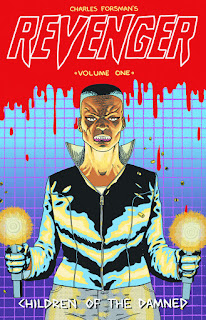
REVENGER VOLUME ONE: CHILDREN OF THE DAMNED
THE BEAUTY VOLUME ONE
WYTCHES VOLUME ONE
DOOM PARTROL #1
THE MIDAS FLESH VOLUME ONE & TWO
WONDER WOMAN EARTH ONE VOLUME ONE
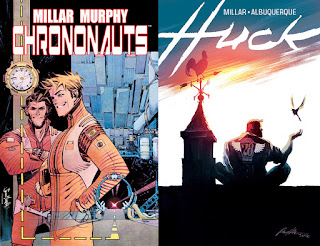
CHRONONAUTS VOLUME ONE
HUCK VOLUME ONE
ONE-PUNCH MAN VOLUME ONE


MONSTRESS VOLUME ONE: AWAKENING
(collecting MONSTRESS #1 - #6)
by Marjorie Liu & Sana Takeda

This is the first collection of an on-going fantasy/horror series, one of the more successful recent launches from Image comics. I thought it was an excellent read, much more dense in plot and character and background than is usual for most new series, from Image or otherwise, with an impressively consistently designed alternate world full of unique creatures, buildings and landscapes. I'm not familiar with the prior work of the creators, but they definitely hit the ground running with this one. And unlike some other impressive debuts, they continued on a steady pace, with six issues coming out roughly on time in seven months, and a second story arc set to begin soon. I'm very tempted to pick up the serialization instead of waiting for the collection.

Short form synopsis is that this is a fantasy world of advanced technology and magic, populated by Humans, intelligent multi-tailed Cats, magical Ancients (immortals with animal features) and Human/Ancient hybrids called Arcanics. Plus mysterious giant Old Gods whose ghosts haunt the skyline. Our lead is one young Arcanic girl named Maiki Halfwolf, who is on a quest of both discovery and revenge. Liu demonstrates some detailed work on the background of the world, some complex plotting where small details pay off issues later and a good ear for dialogue, where she's able to put in some genuinely funny bits. For the visuals, Takeda shows a wide variety of influences, combined seamlessly into something completely her own. There are traces of some European comics in the METAL HURLANT vein, especially in the colours, some very Japanese influences (comics and animation) in the faces and creature designs.

Overall just a delightful read. Generally I'm pretty much no more than mildly impressed (and often very disappointed) in new comics, so it's good to occasionally come across one I like so much.


SURGEON X #1
by Sara Kenney & John Watkiss

The first issue of a new medical science fiction series written by first time comic writer Kenney and drawn by Watkiss, who has credits going back decades, mostly for DC's Vertigo imprint. Relevant to that is the editor, which I don't usually note, but who earns a rare editorial cover credit this time. Karen Berger, long-time head of that Vertigo imprint that she founded, with her first work in comics since leaving DC. It's a well earned credit, since I kind of doubt that Image would have greenlit a medical SF series by a first time comics writer and relatively little-known artist without the endorsement of Berger. It definitely got more attention on release than its pedigree would suggest, just the fact that there was a pile of them available for me to buy is surprising.

This was a decent enough debut. It's a near-future Britain, which is in a bit of a medical crisis that involves rationing treatment, and a young surgeon who fights back against that, with some help from friends and family. Kenney does the usual required introductions for the characters and the world, setting up some future plots, pretty smoothly, and Watkiss is solid on the artwork.

I'll probably be around to check out the eventual collection.


REVENGER VOLUME ONE: CHILDREN OF THE DAMNED
(collecting REVENGER #1 - #5)
by Charles Forsman

This is a bit of a change of pace for Forsman from his earlier major books, TEOTFW and CELEBRATED SUMMER. This is a bit of a throwback to 1980s independent comics, even going so far as to be set in 1987. That was the year that The Punisher got an on-going series at Marvel, after years as a supporting character, and I could probably pull out a handful of b&w independent comics inspired by that from that era that REVENGER could sit comfortably beside (DELTA TENN and JACK OF NINES are the first two that come to mind). It's noteworthy that the other book from the publisher of the collection, Bergen Street Press, is the SUICIDE SQUAD (1987 series) inspired COPRA.

The Revenger is a black female vigilante, with a violent origin alluded to in a few flashbacks, who takes on missions for those who call her answering machine. The main mission in this story is the missing girlfriend of a guy in the small town of Neptune. It all gets very violent, as well as increasingly absurd, as matters escalate through the story. It was a pretty fun read, overall. There are three issues of a second series out right now, I'll probably check that out when it's done and collected.


THE BEAUTY VOLUME ONE
(collecting THE BEAUTY #1 - #6)
by Jeremy Haun & Jason A. Hurley

This is the first collection of an on-going series from Image. The high-concept is that there's a sexually transmitted disease called "The Beauty" which makes the infected physically attractive and has quickly spread to half the population before its side effects become known. It follows two police officers as they get entwined in various schemes and conspiracies regarding the disease.

I thought the first half of the book was really solid, setting up the premise, exploring some of the implications and presenting more pieces to the mystery. It really starts to lose me in the second half, as it becomes more convoluted, with action scenes that don't read as smoothly as they should and some generally unclear writing. I don't think I'll be back for more.


WYTCHES VOLUME ONE
(collecting WYTCHES #1 - #6)
by "Jock" & "Scott" Snyder

This is the first collection of a horror-fantasy series from Image. Theoretically it's continuing beyond this, although no further issues have been scheduled as of this writing. I thought it was pretty good at juggling around the usual tropes of hidden societies, monsters in the woods and all that. I kind of liked the art, but found the colouring on it to be very distracting at times. The backmatter shows that it was done with actual spatter paintings being scanned in and put in the background of the coloured pages. I'm not sure why anyone thought that was a good idea, the plain coloured pages shown in the back look much clearer.

Anyway, I mostly liked the book,, although I found the last chapter to be a bit frantic and unclear, and the ending not too satisfying. What I liked was enough that I'll take a look if they ever decide to continue it.


DOOM PARTROL #1
by Gerard Way & Nick Derington
[Doom Patrol created by Arnold Drake (acknowledged) and Bruno Premiani (unacknowledged)]

Well, this is a bit of a mess of a comic. I'm giving it the benefit of the doubt that it makes much more sense to people who have read prior iterations of the characters beyond the Drake/Premiani years, especially the Case/Morrison/etc. run. I've only read a handful of those Case/Morrison issues, so it was all noise to me. I liked some of the previous Way comics I'd read, so I know that he's capable of telling a coherent story, introducing characters and all that stuff. Guess it was a conscious decision not to do any of that here.

Pretty enough cover by Brian Bolland there, and Derington's art is nicely clean and clear, I'd come back for more of him, but not for more of this book.


THE MIDAS FLESH VOLUME ONE
THE MIDAS FLESH VOLUME TWO
(collecting THE MIDAS FLESH #1 - #8)
by Shelli Paroline, Ryan North & Braden Lamb

This collects the complete series in two volumes. Not sure why they thought splitting it in half was a good idea. The concept here is that if you take the fable of King Midas seriously, his powers to turn objects he touches into gold would quickly turn the whole world gold, because everything touches everything else, eventually. So thousands of years later, a trio come to Earth and look for the "weapon" that somehow turned an entire planet to gold to use in their own battle against a conquering Federation.

I like some of the concepts in here but did not like the book overall. North has a lot of annoying dialogue ticks, some of which might sound better if this was spoken out loud instead of read on paper, but a lot of them are pretty inexcusable in any circumstances. A character actually says "Can I get a what what?" That might be acceptable on a Disney Channel or Nickelodeon tween comedy. Ten years ago. It goes beyond stretching it to put in in a science fiction story, set in a universe where the Earth was turned to gold thousands of years ago, so there is no bloody Jay-Z to reference. The book is full of stuff like that, and all of North's writing felt a little half-baked, desperately in need of a second draft. Especially the ending, where he tries to get scientific about his teenage stoner idea ("Hey, man, if everything Midas touched turns to gold, and everything touches everything else, than wouldn't the whole world turn gold?").

The art was a bit better, for the most part. Nothing too special, but serviceable, easy to read and sometimes cleverly designed. Sometimes the action bits were a little unclear, but that was a minor problem.


WONDER WOMAN EARTH ONE VOLUME ONE
by Yanick Paquette & Grant Morrison
[Wonder Woman created by William Moulton Marston (acknowledged) and Harry G. Peter (unacknowledged)]

I'm not sure I completely understand DC's "Earth One" line of original hardcover comics. They seem to throw considerable marketing and production money into them, and appear to have gotten somewhat decent sales despite the (arguable) lack of quality of some of the books. But they don't seem to be at all interested in capitalizing on that by speeding up the production of the books, which have averaged one a year since they started, with two-plus years being common for volumes of the same series. Despite that, they also don't seem too interested in making sure that each book tells a complete story, despite knowing it's at least two years for a follow-up. They've also seemed to imply that all the books take place in the same fictional world, but there's really no evidence of that in the books.

Anyway, I found this pretty disappointing for such a well hyped book, but disappointing is pretty much my default reaction to Grant Morrison, so at some point I have decide he's just not for me. This seemed to be especially pretentious, even for Morrison, starting with the dedication and going downhill from there. I thought Paquette's art was also weaker than I expected, based on some limited exposure to his work before this. I didn't recall it being so stiff, with poses and faces clearly based on glamour photography that don't suit the actual story situations at all.


CHRONONAUTS VOLUME ONE
(collecting CHRONONAUTS #1 - #4)
by Mark Millar & Sean Murphy
HUCK VOLUME ONE
(collecting HUCK #1 - #6)
by Rafael Albuquerque & Mark Millar

Not sure why I keep reading Mark Millar's movie-pitch comics. I guess I find them entertaining enough, in a low calorie way. He works with good artists, certainly, who seem to enjoy the opportunity to work on an "original" concept with fewer editorial restraints, while still getting well paid in the short term (and opening themselves up to getting very well paid in the long term). Certainly in these two books Murphy and Albuquerque are doing most of what's worth reading.

For his part, Millar seems to have to formula down. Don't get too bogged down in characterization or subtext (especially regarding supporting characters), since the eventual screenwriters and directors will have their own ideas of what direction to take. Make it a quick read, throw in a few big visual ideas that give some idea of the potential for the concept on the screen. Make sure every issue has a big cliffhanger, even if you don't have anywhere near as big a resolution to that cliffhanger. Don't worry too much about plot holes (like one big one in HUCK), just wrap up everything with a bow so you have a package that can be digested in 30 minutes. I guess sometimes it's good to just have a non-challenging good-looking quick read that won't stick with you an hour after you finish it.

ONE-PUNCH MAN VOLUME ONE
by "One" & Yusuke Marata

This is a fairly successful recent Japanese comic, up to seven volumes in English now. It's about an odd bald expressionless hero names Saitama who can somehow defeat any foe he goes up against with, as the title says, one punch. Which he finds extremely frustrating.

Very strange comic. I got a few laughs out of it, which might be enough for me to check out another volume. But I didn't like the artwork that much, with a lot of the cliche things I don't like about a lot of Japanese comics very much in evidence, and very hard to follow storytelling on top of that.

Friday, September 30, 2016

Recently Read 2016.09.30

A few thoughts on some of my recent readings...

BONE: CODA
by Jeff Smith and Stephen Weiner

This recent book from Jeff Smith has three sections. The first, and only one I've really read, is a new 36-page story of the Bone cousins (and Bartleby) following right after the conclusion BONE #55 back in 2004. The backcover promises it to be a "completely superfluous" adventure, and it delivers on that score. It's just another leg on the journey back to Boneville for our cast, and has their usual bickering interplay. Smith is always good at that, but it lacks the depth that he showed in the more dramatic parts of his 55 issue story. It would definitely be a distraction if it was actually at the end of the last book, in whatever format, but works fine on its own. I suppose the one thing it does establish is that getting back to Boneville from the Valley isn't a straightforward journey, so the prospect of any of our heroes ever going back to the Valley is even more remote.

The next 24-page chunk is an essay by Smith about the creation and publication of Bone, profusely illustrated with both photos and illustrations. Some of the illustrations are pretty cool. I've only skimmed the text, but it looks like it has some stuff I don't know about the history of the era.

The second half of the book is a 64-page presentation of Stephen Weiner's "Bone Companion", with some writing about the series and Smith's storytelling and its historical context, plus a short interview with Smith. This was released independently before, but without illustrations. Now it's fully illustrated with examples of what Weiner's talking about. Again, I've only skimmed it, it's not really for me, but has some interesting stuff.

Not sure if I can really recommend the book overall, but definitely take a look to see if your library has a copy to read the short story.

FIGHT CLUB 2 - THE TRANQUILITY GAMBIT
by Chuck Palahniuk & Cameron Stewart

This is a collection of the 10-issue series FIGHT CLUB 2, a sequel to Palahniuk's 1996 novel, better known for its 1999 film adaptation. I've never read the book, but watched the movie a few times, and mostly enjoyed it. However, Fight Club fans can be troublesome. I had to spend an hour at a party 15 years ago being polite as two guys talked about how great and important the book was, and what line from it they should get a tattoo of. That was literally the worst thing that happened to anyone in 2001...

Anyway, this is kind of an unusual thing, a novelist going to comics to do the sequel to one of his works. Can't think of another example offhand. And it starts off pretty good. Set several years after the end of the novel (which is different from the end of the film. A short story at the end of the book retells the end of the novel, I'm not sure why it wasn't at the front of the book), the first few chapters lay out an interesting premise based on the themes of the original story, and have some innovative storytelling concepts. I'm not sure if those are from Palahniuk or Stewart but they're expertly realized without being too distracting. The middle starts to get a little bit ridiculous, but still within the bounds of the fictional universe, and with the possibility of redemption once all the cards were on the table. And then it all goes to hell. Without getting too much into spoilers, Palahniuk takes the idea of meta-fiction to an absurd extreme, and very much makes the story about the story. And about the storyteller. And about the reader. And while I made it perfectly clear I'm fine with mocking Fight Club fans (here, if not to their faces), this wasn't what I wanted. The last two issues were a chore to get through.

I'd say avoid, overall. Or read the short story at the end, then the first three chapters, and then pretend the rest doesn't exist. And make an appointment to get that tattoo lasered off...


AGONY
by Mark Beyer

This is a re-issue of the 1987 book by Beyer, originally published by Raw Books and Pantheon, and featuring Beyer's characters Amy & Jordan. The characters were a staple of the anthology RAW in the 1980s, and later appeared in a comic strip by Beyer, which has a few collections. This new edition of the 1987 book is, I think, the first release of the new New York Review Comics imprint of the New York Review of Books.

It's hard to describe Beyer's work. Visually it's got an odd primitive outsider art quality to it, but with a sort of visual consistency and clarity of idea that is almost hidden by the style. The writing is equally bizarre, with an almost stream of consciousness plotting that has all sorts of weird and violent things happening to Amy and Jordan as they try to live their lives. I enjoyed it a lot more than I was expecting to, not having really gotten into the comic strip version before, and might give that another look now.

MEMORIAL
by Rich Ellis & Chris Roberson

This is a 2012 collection of the 6-issue series drawn by Ellis and written by Roberson, with covers by Mike Kaluta (who, frankly, seemed to be drawing covers featuring different characters). It's pretty much built on one of the standard modern fiction concepts of taking classic literature and mythology and presenting a fantasy framework where some of those well-known characters (or variations thereof for still copyrighted characters) can interact with each other and the original characters of the creators. Basically the SANDMAN/FABLES/UNWRITTEN formula that Vertigo has been used to various levels of success over the last few decades.

It's not done badly here, where the framework is a over-realm outside the real world with three sections, Memory, Moment and Maybe, representing past, present and future, and a battle between the rulers who represent those concepts personified. I'm just not really sure if it brings anything new to the table. It does have some potential, Ellis has some interesting artistic turns, and most of Roberson's writing was fine (the exception being the weird omniscient narration, which was sometimes trying way too hard to be cute), These six issues pretty much just set up the concept, which could be used to do something interesting, but to date it looks like the only follow-up was a 3-issue as-yet-uncollected series from 2013.

TOKYO GHOUL VOLUME 1
by Sui Ishida

This has been one of the most successful new Japanese comics in English over the last year, currently up to 8 volumes and a staple of the best-seller lists. It's a horror comic about a Tokyo which is inhabited by an underground society of flesh eating ghouls, and a young student named Ken Kaneki who gets drawn into their world thanks to an emergency transplant which turns him into a human-ghoul hybrid.

I liked bits of the first few chapters of the book, but overall wasn't that interested and was ready to declare it "decent, but not for me" and a one-and-done. Then suddenly things started to really click with the cliffhanger to the penultimate chapter and then into the finale of the book. So I guess I'll have to try at least one more.

I have to say, I found the action sequences in this book really difficult to follow. I'm not sure if that's just a familiarity with modern Japanese comics storytelling or what, but almost every time there was an action scene I had to go over the artwork multiple times, usually looking at the final results of the scene and sometimes just barely being able to piece together how we got there from the art. I hope that's not too common in later books, as I found that really frustrating.


THEY ARE NOT LIKE US VOLUME 1: BLACK HOLES FOR THE YOUNG
THEY ARE NOT LIKE US VOLUME 2: US AGAINST YOU
by Eric Stephenson & Simon Gane

These two books collect 12 issues of the series by Stephenson and Gane, which is basically a sort of "mutants in the real world" take on superheroes. The main character is a young girl whose nascent telepathic powers, in a society where such powers are unknown, are seen as signs of insanity. She gets taken in by group of youths with similar powers, who have very specific ideas on how to use those powers for personal gain.

This was a pretty entertaining book, if a bit rough around the edges. I had some trouble remembering the various characters and their powers, and that's with only a few days between issues. I can't imagine it would be better with a month or more between issues. Still, there are a lot of interesting ideas, and sometimes there are some very bold and inventive visuals.

Unfortunately, the 12 issues here pretty much just tell the opening act of a longer story, but the last issue was six months ago and there don't appear to be any more on the immediate horizon.


KING BABY 
by Kate Beaton

KING BABY is a recent children's picture book by Kate Beaton, who has had considerable success with cartoons of historical and literary humour for older readers. Like all picture books it was a quick read, but still pretty clever, and with some nice interplay between the text and images which is sometimes missing from these books. Definitely would recommend it for the target audience.


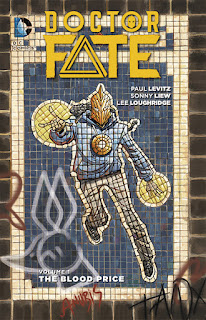
DOCTOR FATE VOLUME 1: THE BLOOD PRICE 
by Sonny Liew & Paul Levitz
(Doctor Fate created by Gardner Fox & Howard Sherman, unacknowledged)

This collects the first 7 issues and a short preview for the currently running (and soon ending) series with the latest revival of the long-running DC character.

If asked I'd probably say that I was a fan of Paul Levitz's work, although you have to go back over a quarter century for me to give a concrete example of why. After 1989 he was more an executive than a writer until a few years ago, and I haven't liked what I've read of his stuff since he got back into writing. And even his main writing assignment in the 1980s on LEGION OF SUPER-HEROES was uneven, with some incredible highs but lots of problems.

This DOCTOR FATE book was the best I'd read from him in a while, but far from perfect. So far it's a new take on the character, without any reference to previous versions, featuring a young medical student named Khalid Nassour who gets magical powers from an ancient Egyptian helmet, thanks to some pharaoh's blood in his lineage. Levitz does a pretty decent job on the lead, although there is some of the almost inevitable awkwardness of someone trying to write a character 40 years younger than him. He doesn't do as good a job on the supporting cast, unfortunately, who are still pretty generic and barely sketched out after 7 issues. And for the most part Fate's powers are still pretty much just hand-wavy magicing.

Sonny Liew's art is more interesting than the writing. It's a very unique look for a mainstream comic. I liked it a lot, with some very expressive faces and body language, and imaginative creatures.

One minor complaint, the first two chapters there was a font used for Fate's dialogue which I had a really hard time reading, to the point where I was pretty sure I'd give up on the book half-way through if they kept it up and it was more frequent. Someone must have agreed, as they quickly changed to a clearer font for the rest of the book. So how hard would it have been to go back and change the font in the earlier issues? There weren't that many balloons which would have to be changed, and it would have added to the visual consistency of the book.